

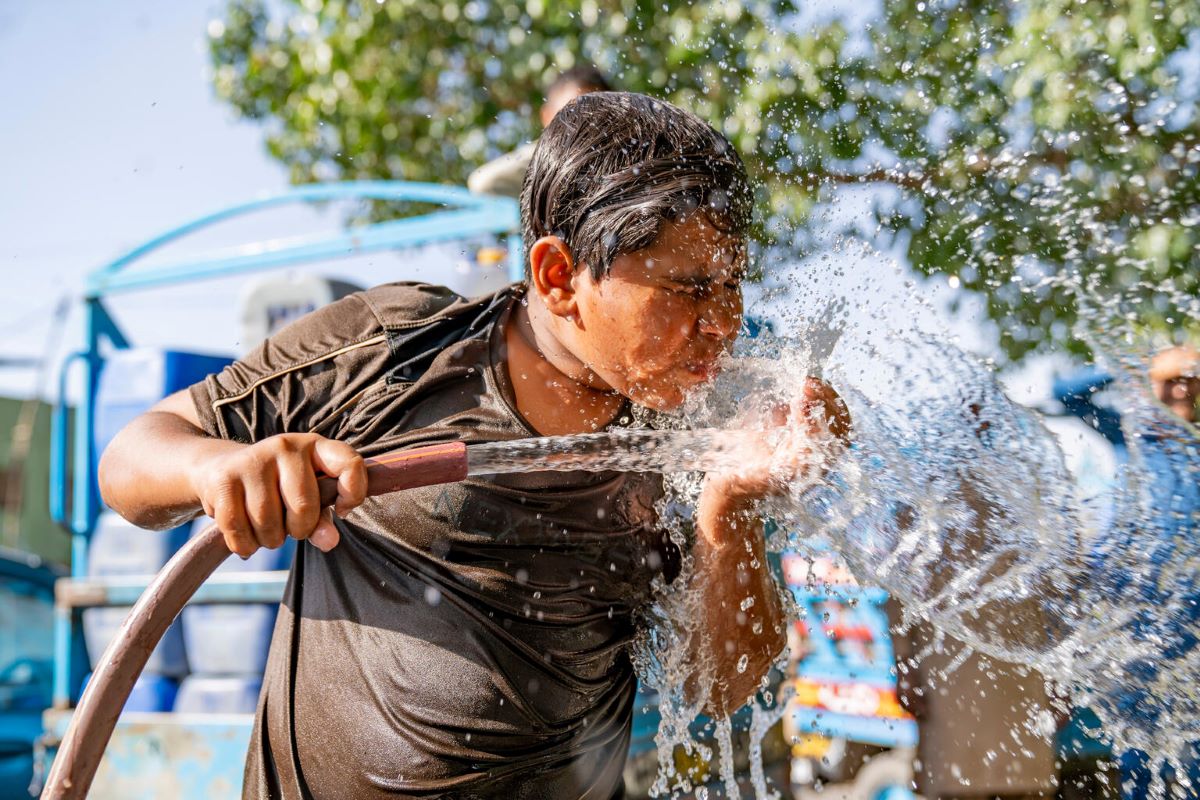
KUALA LUMPUR, August 14 – While extreme heat is increasing in every country worldwide, a new UNICEF analysis shows that children are also exposed to more severe, longer, and frequent heat waves.
Across 100 countries, more than half of children are experiencing twice as many heat waves today as 60 years ago.
In Malaysia, 7.2 million children are experiencing twice the number of heat waves as compared to the 1960s.
Using a comparison between a 1960s and a 2020-2024 average, the analysis issues a stark warning about the speed and scale at which extremely hot days – measured as more than 35 degrees Celsius / 95 degrees Fahrenheit – are increasing for almost half a billion children worldwide, many without the infrastructure or services to endure it.
In Malaysia, heatwaves have become more frequent and longer lasting in the country since the 1960s.
Now in the 2020s, there are an average of eight heatwaves per year, each lasting about five days.
In contrast, heatwaves in the 1960s occurred only twice a year and lasted up to four days.
The severity of these heatwaves in the country has also increased, with temperatures rising from 0.35 degrees Celsius above the local average in the 1960s to 0.69 degrees Celsius above the average in the 2020s.
Malaysia’s hot and dry season now begins earlier, a trend exacerbated by intensifying El Niño events, underscoring the accelerating pace of climate change.
Approximately 750,000 children in Malaysia in the 2020s live in areas experiencing twice as many days above 35 degrees Celsius compared to the 1960s.
“The hottest summer days now seem normal,” said UNICEF Executive Director Catherine Russell. “Extreme heat is increasing, disrupting children’s health, wellbeing, and daily routines.”
Heat stress within the body, caused by exposure to extreme heat, poses unique threats to the health and wellbeing of children and pregnant women, particularly if cooling interventions are not available.
It has been linked to pregnancy complications such as gestational chronic diseases and adverse birth outcomes including stillbirth, low birth weight, and preterm birth.
Excess levels of heat stress also contribute to child malnutrition, non-communicable diseases such as heat-related illnesses, and leave children more vulnerable to infectious diseases that spread in high temperatures such as malaria and dengue.
Evidence shows that it also impacts neurodevelopment, mental health, and wellbeing.
Extreme heat also has more concerning effects when experienced in longer periods of time.
The impact of climate-related hazards on child health is multiplied by how climate-related hazards affect food and water security and contamination, damage infrastructure, disrupt services for children, including education, and drive displacement.
In addition, the severity of these impacts is determined by underlying vulnerabilities and inequities children face based on their socioeconomic status, gender, location, existing health status, and country context.
In the coming months, all Member State Parties to the Paris Agreement must submit new national climate plans – Nationally Defined Contributions (NDC 3.0). These plans will set the course of climate action for a decade. They are a time-bound opportunity to set out concrete plans to realise the goals of the Paris agreement.
UNICEF is calling on leaders, governments and the private sector to seize this opportunity to deliver urgent and bold climate action which upholds the right of every child to a clean, healthy and sustainable environment by taking the following actions:
- Reduce emissions and fulfil ambitious international sustainability and climate change agreements with urgency to get rising temperatures under control.
- Protect the lives, health, and wellbeing of children and the resilience of their communities, including by adapting essential social services to a changing climate, more frequent disasters, and degrading environment. For example, by making sure every health worker is trained to detect and treat heat stress, and by making health and education facilities resilient to extreme heat.
- Empower every child through their life course with the developmental opportunities, education, and skills to be a champion for the environment.
“Children are not little adults. Their bodies are far more vulnerable to extreme heat. Young bodies heat up faster, and cool down more slowly. Extreme heat is especially risky for babies due to their faster heart rate, so rising temperatures are even more alarming for children,” Russell said.
“Governments must act to get rising temperatures under control, and there is a unique opportunity to do that right now.
“As governments are currently drafting their national climate action plans, they can do so with the ambition and knowledge that today’s children and future generations will have to live in the world they leave behind.”