
KUALA LUMPUR, March 17 – A newly published report, ‘Portraits: Journey of Gender Based Violence Survivors across Malaysia’s One-Stop Crisis Centre’, features the accounts of GBV survivors in Malaysia who shared their experience and insights on their interactions with service professionals in law enforcement, health care and social work as they navigate their way through country’s justice and care system.
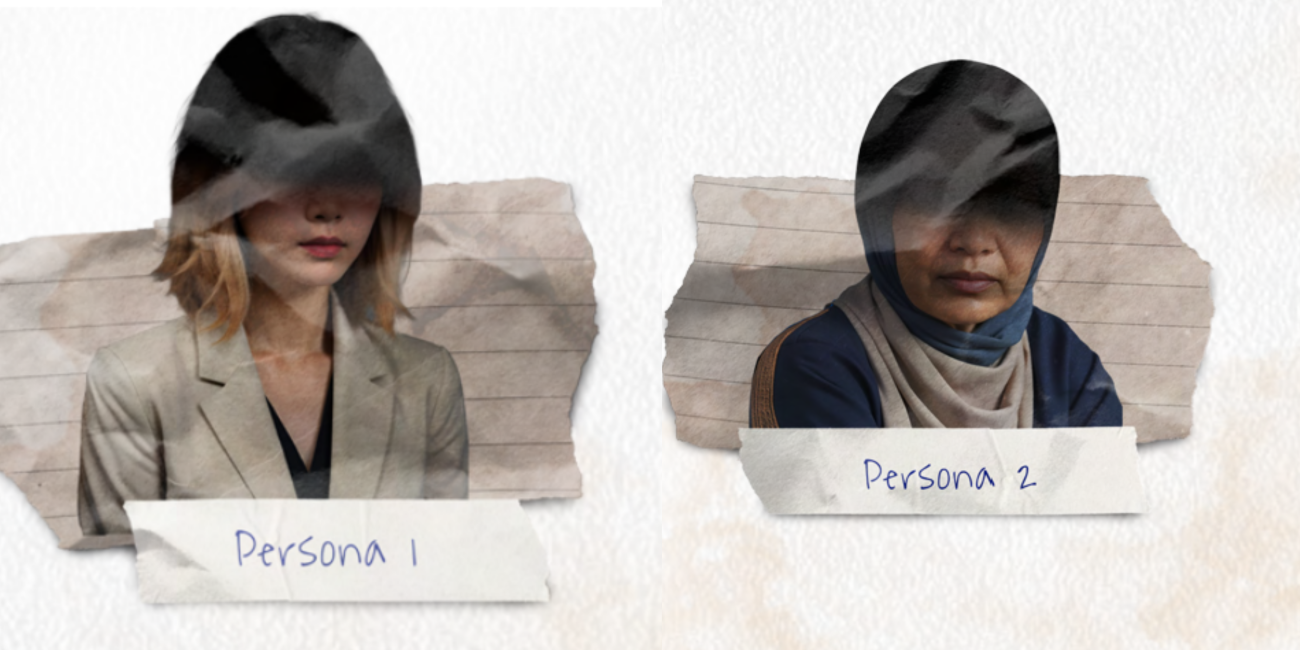
Published by the United Nations Population Fund (UNFPA) Malaysia and the United Nations International Institute for Global Health (UNU-IIGH), the narratives featured in the report are told through the lens of GBV survivor personas.
The personas were developed through a composite of resources including in-depth interviews and informal discussions with survivors and civil society organisations (CSO) representatives, GBV policy analysis, peer-reviewed literature, and information obtained from presentations and stakeholder workshops.
During a special presentation of the report last March 6, its lead author Claudia Abreu Lopes, who is research lead at UNU-IIGH, said the personas were developed to put a face on the experiences of GBV survivors while protecting their identities and respecting their right to privacy.
“We did a qualitative study where we interviewed survivors and also involved NGOs, CSOs and all those who have direct experience with survivors to create these portraits or personas of survivors,” she explained.
The following are the abridged accounts of GBV survivors from the report through the perspectives of the personas:
TENG LAN: Surviving Rape At A Party

Teng Lan’s persona narrative draws on:
- Analysis of 11 interviews with GBV survivors
- A comprehensive analysis of the GBV policy landscape in Malaysia prepared by UNU-IIGH
- Experiences of other GBV survivors with similar settings drawn from the relevant, peer-reviewed literature focusing on Malaysia and Southeast Asia.
After she was raped by two young men at a party, Teng Lan, 28, felt like her life had ended. The morning after she was assaulted, Lan took leave from her job at a public relations agency.
She wondered how she would explain what had happened to her parents, friends and colleagues, worrying about what their reaction would be. Although she respected her parents, she felt suffocated by their views on how a proper woman should behave and conduct herself.
The person she confided in about the assault was her roommate, Lee, who works for a women’s rights NGO. Lee also called in sick from work to help Lan though her ordeal.
As she forced herself to get dressed, Lan winced as her clothes came into contact with the areas of her body that were in pain from the assault including her genitalia, the insides of her thighs, and her breasts where the two men had bitten her.
Lee drove her to a private clinic first as they thought Lan would be treated faster and more discreetly there, but found out instead that only public hospitals could attend to rape victims and administer the required treatment.
Hurtful Comments, Lack Of Eye Contact, Victim-Blamed
They headed to the main public hospital in the area where Lan found herself on the receiving end of the receptionist’s reproachful glances, as she discussed with Lee whether Lan could be admitted without having submitted a police report.
Lan had thought about reporting the rapists to the police but she knew very little about them, except that they came from prominent business families and were probably well-connected. However, through Lee’s earlier efforts of calling friends from the party to learn as much as she could about Lan’s assailants, they were able to ascertain the rapists’ identities through further verification on social media.
Lan decided to go to the police station to conserve her energy and avoid arguing at the hospital. At the station though, the female police officer who took her statement made hurtful comments about young women’s attitudes and lack of common sense as well as morals. Another police officer who joined them mumbled something about the whole thing being her fault.
When she returned to the public hospital, a male doctor and attendant was assigned to Lan despite her wish to be examined by a female doctor. The young male doctor who performed the rape test was shy and would not even look her in the eye during the procedure, which made her feel even more uncomfortable.
His questions and manner also implied, although not as pointedly as the police officers, that she was essentially responsible for her attack by being at the party in the first place.
With only a flimsy curtain between her and the rest of the busy emergency room, Lan constantly felt on edge. Still, it was not until she was told that the hospital could not give her the post-exposure prophylaxis (PEP) drugs or the morning after pill that her dismay turned into desperation.
She needed the PEP to protect herself against a possible HIV infection and the morning-after pill to prevent a potential pregnancy. The staff informed her that she was to be given the PEP only after she tested positive for HIV. However, the HIV test was not available at the hospital.
Lee took Lan back to their apartment and after spending two hours on the phone, found a private hospital specialising in family planning that could administer the treatments Lan needed that same evening. However, Lan slept poorly and remained consumed with worry about her health and future, especially since she would have to wait three months for her test results.
Trying To Regain A Sense Of Normalcy
Since she had not received any follow-up support from the OSCC, Lee placed her in touch with friends from another NGO that offered counselling and legal aid to GBV survivors. While she was hesitant at first, Lan decided to try counselling after her first panic attack.
The legal aid also proved invaluable in dealing with the police, who kept asking her for additional evidence, which Lan found highly distressing. She never received the forensic and medical reports, which, according to the hospital staff, could only be shared with the police.
Over the next four months, Lan tried to regain a sense of normalcy, even as she harboured concerns about contracting HIV and braced herself for the legal proceedings. With the help of Lee and a cousin, she gradually began to accept that she would never be the same and healing will take time.
FARAZ AZIZ: Healing From Long Term Abuse In Marriage

Faraz Aziz’s persona narrative draws on:
- Analysis of 11 interviews with GBV survivors
- A comprehensive analysis of the GBV policy landscape in Malaysia prepared by UNU-IIGH
- Experiences of other GBV survivors with similar settings drawn from the relevant, peer-reviewed literature focusing on Malaysia and Southeast Asia.
On her visits to the hospital following their “arguments”, Faraz Aziz would always be accompanied by her husband or a family member he trusted. Faraz, who had spent years living in fear, could not confide in the medical staff, and her attempts to communicate through expressions and subtle gestures went unheeded.
Her two daughters, who were privy to her ordeal, wanted to help but she didn’t want to burden them. She also dreaded the idea of her family affairs becoming public knowledge.
When her older daughter insisted on taking her to the hospital to treat a severe vaginal infection without her husband or any of her other relatives, Faraz was finally able to tell the doctor about her situation.
The female doctor took down Faraz’s details with her permission and explained that support was available if she wanted to leave her situation. She provided her with two leaflets: one about a government centre, the other an NGO.
Faraz had not been aware that there was anyone she could turn to, besides her family and the police for help.
After reading the leaflets in the car, she gave them to her daughter so that her husband would not find them. Two days after her hospital visit, she got a call from a woman who enquired about her well-being and informed her that they could arrange for Faraz to stay at a house for women in her situation.
When told there would be no police involvement without her consent and only those she trusted needed to know that she had left her home, Faraz felt reassured that she would not be burdening her daughters or escalating things by going to the police.
Making Her Escape
After another beating and what she now recognises as rape, Faraz texted her daughter, explaining that she would be leaving home with the help of the woman who had called her. She gave her daughter a suitcase with clothes changes and a few heirlooms.
It was agreed they would not be in touch initially for everyone’s safety but her daughter could contact the NGO to reach her if needed. Her younger daughter would move in with her older sister, who had her own family.
Faraz escaped on a market day with all her essential documents hidden at the bottom of a grocery bag. The lady from the NGO picked her up in a nondescript car at a less crowded market area.
It Felt So Strange Not To Have To Be Afraid All The Time
In her first couple of weeks at the shelter, she lived in fear that her husband would suddenly show up. Eventually, her anxiety dissipated and she started interacting with the other women there.
It felt so strange not to have to be afraid all the time. The first time she broke a plate while doing the dishes, Faraz had a minor panic attack that she worked through with the help of a housemate.
While she knew she would not be punished, it took her body and mind some time to adjust to the idea that she was safe, as her counsellor explained to her. She also discussed with the counsellor and NGO staff her options moving forward, taking into account the implications on her daughters. It became apparent that to ensure her future, the police would have to be involved.
Reporting Her Husband To Police One Of The Worst Days Of Her Life
The day she decided to report her husband to the police was one of the worst days of her life. The police behaved rudely toward her and her NGO support officer. Additionally, her supposedly private interview was conducted in an office where people kept entering and leaving.
She was also told by a police officer that since her husband had not failed to provide for his family, she should feel lucky instead of causing him trouble this late in the marriage.
Finally, Faraz was stumped when told she would need medical evidence to proceed. She was not aware of and had no access to such documents, given that she was closely watched during prior hospital visits and never had the chance to speak up. All the doctors who had treated her before never asked how she was injured or tried to create space for her to confide in them.
After discussing with her NGO companion, Faraz realised that the only viable option was to proceed with a medical examination. A note from the police expedited her admittance.
The female doctor who examined her this time was brusque and lacked compassion and kindness. Despite Faraz taking time to explain her history and circumstances at the beginning of the examination, the doctor kept pointing out that none of her injuries were recent and that many were part of the “wear and tear” of married life.
At that point, Faraz was growing weary of recounting her story over and over, but she received invaluable information when she did it to her assigned social worker. She was advised on what she needed to include in her police statement to obtain a protection order against her husband and file for a divorce even if she decided not to press charges.
She and her NGO case worker had to spend four hours at the police station, dealing with resentful police officers who did not appreciate the added work, before she was allowed to amend her initial statement.
Seizures From Repeated Head Injuries
Not long after that, Faraz’s health, which was in bad shape from years of abuse, deteriorated rapidly. She had trouble sleeping and developed seizures, which a later MRI revealed to be the result of repeated head injuries she had received over the years.
A couple of weeks later, her lawyer, provided by the NGO, informed her that the medical report they finally obtained would not allow them to press charges against her husband. An option was to involve her daughters as witnesses but Faraz did not want to drag her children into her mess.
She was fifty-four years old and wanted to get on with her life. Luckily, she obtained some good news shortly after. Her lawyer was able to file early for a divorce.
The NGO offered some professional development courses for survivors just like her and she attended an art therapy course. Although she believed that some of her wounds would never heal, at least now she has a sense of purpose and people that she can turn to.