
KUALA LUMPUR, July 10 – A new study on menopausal women in Malaysia found that women from the high income group complained more about menopausal symptoms than women with lower income.
According to the study, which was published in the Climacteric Journal, the official journal of the International Menopause Society (IMS), women with an annual income of RM75,000 or more had significantly higher odds of reporting more than four symptoms, compared to those earning less than RM75,000.

Among the most common symptoms cited by the 1,825 women involved in the study were joint pain (34.6 per cent) and sleep disturbances (31.1 per cent). Other symptoms include brain fog (26.2 per cent), mood swings (25.8 per cent) and digestive issues (25.5 per cent).
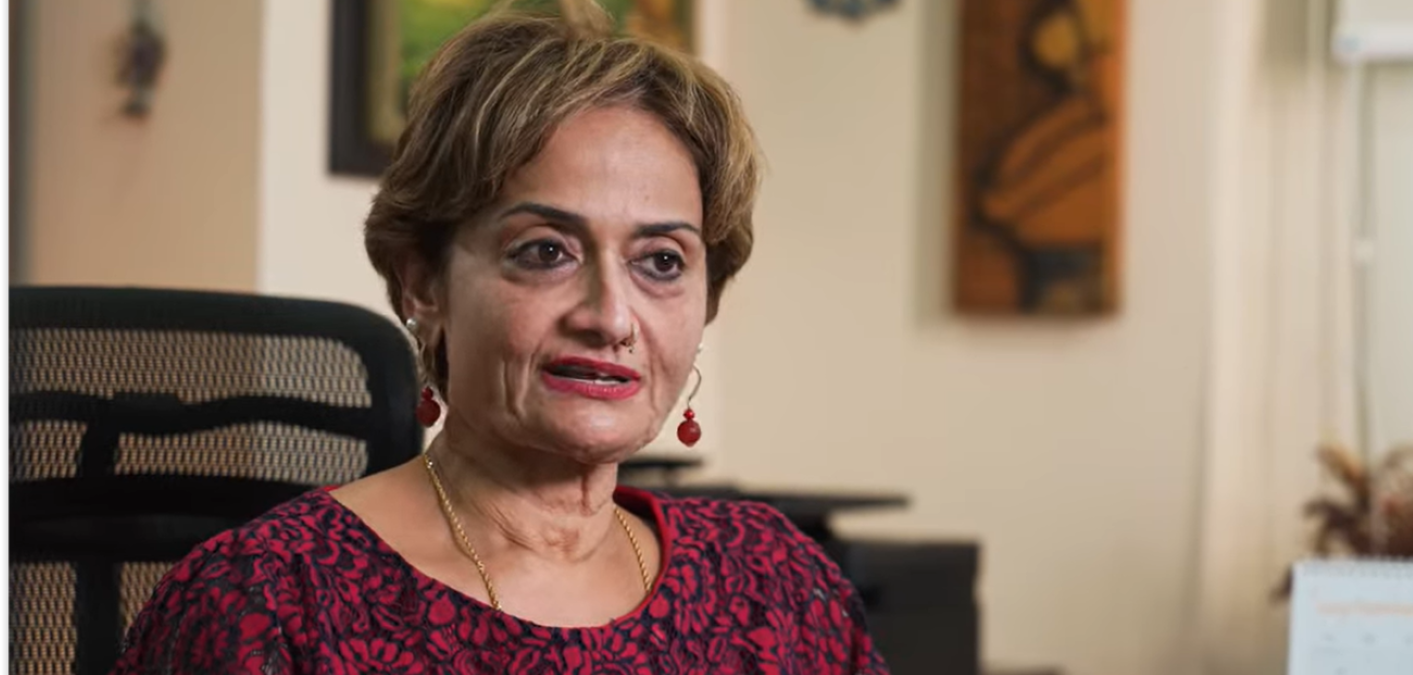
The results of the study differed from most other studies around the world when it comes to income brackets, said its lead author, Dr Premitha Damodaran during an Instagram live chat organised by Menopause Asia last June 25.
“Interestingly, when we looked at studies from around the world, most studies actually show that if you belong to the lower income bracket, you complain more. And if you belong to the higher income bracket you are more aware about menopausal symptoms and you work on yourself and you complain less.

“But you know what, Malaysia has to be different in that our women, the women who belong to the higher income group, actually complained of more symptoms and this is really distinctive.”
Dr Premitha attributes this to awareness. “Many of these women might be leading big companies, be in high-flying jobs and they’re finding that a lot of the symptoms are not allowing them to do their jobs properly — getting that brain fog, sleep issues, concentration problems. And then they’re willing to actually share and talk about it and seek help.”
Meanwhile, she said the lower income group actually may not know that changes that they are having may actually be menopausal related. “They might just think that this is a normal ageing phenomenon.”
Indian Women Reported The Most Symptoms

The study, which investigated the impact of ethnicity, annual income and age on menopausal symptoms among working Malaysian women aged 40 to 60 years, also found that Indian women reported the highest prevalence of symptoms and had a 2.9-fold higher likelihood of experiencing four or more symptoms compared to Chinese women.
Dr Premitha said she was surprised by the results. “I didn’t expect those results to come out. So it is interesting to find that when it comes to four or more complaints, they (Indians) were almost three times more than – I would use the Chinese as a sort of baseline as such — and the Malays were also about 1.5 times more than the Chinese.
“And it’s interesting because we’ve never had data like this. And even if I try to take away biases, and I think maybe my population for Indians were much more, actually they were equivalent across.
“The only other thing that I can think about was that the Indians were of a higher income group in this particular population and maybe that (skewed) the data, but even taking for that bias I just felt that three times more was really very significant.”
Dr Premitha said the results can also be ascribed to culture, which would be useful to take into account when it comes to treating patients.
“When we now try to finetune or talk to our patients about menopause, at the back of our minds we need to remember this data and ask very culturally sensitive questions to them. Because at the end of the day, when we’re talking about menopausal issues we’re going to try and individualise how therapy would work, what kind of lifestyle changes (is needed) and all that.”
Cultural Perception Of Health And Ageing
She said it was important to understand that in Malaysia, the three main ethnic groups all look at ageing very differently.
“The Muslims are wonderful. They actually are taught how to accept ageing. So it is something called redha (accept) that you’re willing to accept and move on from there.
“And if you really look at the Malay women in this particular group, most of them were of a lower socio-economic group, but as their income became more, they actually complained more.
“So again talking about the fact that it could be that they are now aware. And it’s through more awareness that these things can be addressed – let’s go and seek treatment — so that awareness comes in.”
The Chinese in general have always been conscientious about their health, she continued. “They are the first ones to go and do line dancing or go for that Tai Chi class in the morning. Their interaction is great. They go and do their blood tests. So they’re always pro about their health.”
She said this perhaps has actually helped them handle a lot of the changes that come with menopause a bit better compared to the other ethnic groups.
When it comes to Indians, culturally the woman comes last, said Dr Premitha. “Always the man first. So studies from Malaysia itself showed that the Indian man goes and gets treatment, but the Indian woman does not. So she actually internalises, she suffers until it is actually kept to a higher level and then she seeks help.
“I might be wrong, I might be just generalising, but understanding this culture can actually help us sort of finetune our consultations, our management of that woman sitting in front of us.”
Accept That Your Body Is Changing
However, regardless of their ethnicity and income bracket, all women need to accept the fact that their body is changing, Dr Premitha said.
“I think that’s really very important because for a lot of us, menopause is a bad word. It’s a stigma. Ageing is another bad word. So when you have menopause it equates ageing and it becomes a double burden that’s going to work on your head even more.
“I always tell women, when we go through puberty our bodies (were) also ageing. We had to change clothes, we had to change bras, we had to deal with periods, hair growing in the wrong places sometimes, pimples coming (out).
“But we accepted it very well. Here things are actually slowing down, so a lot of it is adjusting, accepting, and then seeing how you can actually work around it. So that’s half the battle actually when we accept that our body is changing.”
Symptoms such as joint pain and vaginal dryness increased with age, peaking in women aged 55 to 60 years. Mood swings were highest in women aged 45 to 49 years, while hot flushes, night sweats and sleep disturbances peaked at age 50 to 54 years, according to the study.
With menopause, there is also increased risk of vaginal infections, urinary tract infections, and sex will become more painful, Dr Premitha said, adding that some women even bleed after sex.
She said it was important to have open conversations about the symptoms with a doctor who may be able to help women understand and deal with them. “Let’s talk about it. Let’s see what we can do to help you through it because we are all living older and living longer and longer.”
Women Live Almost 40% Of Their Lives In Menopause
Dr Premitha pointed out that with their lifespans becoming longer, women will live almost 40 per cent of their lives in menopause. According to the study, Malaysian women’s life expectancy in 2024 was 79.5 years, exceeding Malaysian men who had a life expectancy of 74.4 years.
“If menopause is at about 50, you’re looking at about 30 years of your life. That’s a big number. You’re living longer. But we are not living healthier.
“Women are outliving men but our extended years are in poor health,” she said, adding that women cannot expect maids to look after them. “It’s going to be expensive. We can’t depend on children to look after us. We have to be self-sufficient, so it’s really very important.”
Women who are able to accept that they are going through a transition, are more open to getting help about it, she added.
On the flipside, there are also many positives to menopause, said Dr Premitha. “You don’t have to deal with periods! For the Muslims they can pray. For the Indians because you can’t pray when you have your period so they can go for their pilgrimages, which is great.
“This is the time for yourself. You’ve probably given 20 years or more to the family, to the children. Hopefully they’ve all left home and are independent. You may also be at the peak of your career. Go all out and deal with that because women need to change the world.”
How Does Menopause Affect Working Women

In fact, Dr Premitha said the next phase of the study would focus on how menopause affects working women. “Were they suffering through work with it? How much was it affecting their work?” she said, adding that some women actually took time off work, while some left work because they couldn’t cope with it.
“So that’s going to be actually a more significant portion of the whole thing because that forms the crux of menopause at work.”
The final phase would look into menopause at the organisational level including whether menopause is something that can be comfortably discussed at work, are women receiving the support they need at work, and the kind of changes they would like to see. “I’m going to put all this in that same format based on ethnicity and their income bracket,” she explained.
“I think what my aim is at the end of the day is if I can, and I’m hoping I can, that once (all of it is completed), is probably to find someone to work with from the Ministry of Health, to work out the health economics about how women actually fare during this period of time, how much of loss it would be to companies, to the nation, when women actually suffer at work and don’t perform well, or they take time off work, or they resign because they cannot cope with their changes at work.”
In the US, the economic loss has been estimated at USD1.8 billion annually, she added. “We have no idea what it is in Malaysia. But I’m hoping that this will go somewhere, you know, get that calculation organised for Malaysia.”
In the meantime, Dr Premitha advised women not to view menopause as a sign that things are all going to go downhill. Don’t just hide, chalk it all down to ageing, and say you have no choice but to accept what’s happening, she said.
“You don’t have to accept it, you can work around it and make it better. (Menopause does not) mean everything’s dead or it does not mean the end.
“I can tell you personally for me everything actually got better.”