
A mother paused at my clinic door recently, her daughter balanced on her hip. “Doctor, I saw something online saying vaccines might cause autism again. Is it true?”
Her question was brief, but the worry in her eyes was unmistakable. And she is not alone. Many parents are now asking the same thing after the latest online buzz.
Recently, parents noticed that the United States’ Centers for Disease Control and Prevention (CDC) had updated the wording on its “Autism and Vaccines” webpage.
This modification in phrasing spread quickly on social media, leading some to wonder whether new evidence had emerged linking vaccines to autism.
However, it is important to clarify that:
- No new research was released alongside this update.
- No new scientific data was presented.
- No study showing a link between vaccines and autism has been published.
The change represented an adjustment in how the information was communicated, not a revision of scientific conclusions.
Following this, several scientific and medical organisations issued statements reaffirming that the current scientific consensus remains unchanged.
The Autism Science Foundation (ASF) reiterated that decades of research continue to show no causal link between vaccines and autism.
The Infectious Diseases Society of America (IDSA) also highlighted that robust scientific evidence continues to support vaccine safety,
In other words, while the wording on a webpage shifted, the science did not.
What Does The Evidence Say?
The possible relationship between vaccines and autism has been extensively studied. Across countries and decades, the conclusion remains consistent.
Large population studies show no association: Multiple large-scale studies involving hundreds of thousands of children found no difference in autism rates between vaccinated and unvaccinated children.
A major 2025 Danish study has reconfirmed vaccine safety. A nationwide cohort analysis showed no association between aluminium-containing vaccines and autism, autoimmune diseases, or chronic conditions.
Scientific bodies reaffirm the global consensus: Statements from the ASF, IDSA, and other professional organisations continue to emphasise that vaccines are not a cause of autism.
The original study claiming a link has been discredited: An infamous 1998 study that first suggested a link between the MMR vaccine and autism was retracted for scientific and ethical misconduct; its findings have never been replicated.
Falling vaccination rates have serious consequences: Countries experiencing drops in vaccination coverage have seen the return of measles and other preventable infections, while autism rates have not changed.
If Vaccines Don’t Cause Autism, What Does?
Autism doesn’t have one single cause. It is a complex neurodevelopmental condition, shaped by:
- Genetic influences.
- Early brain development.
- Prenatal factors.
Environmental components unrelated to vaccination.
Vaccines do not appear anywhere in this equation. But by refusing vaccines, the risk of severe, preventable illnesses such as measles, pneumonia, and meningitis does increase.
Why Are Parents Confused?
Parents are not confused because they lack understanding. They are confused because health information online evolves rapidly.
Website updates can be misinterpreted as new scientific discoveries. Social media also amplifies uncertainty.
Autism is a deeply emotional topic, and parents naturally fear making the wrong decision.
This is why health care professionals must offer clear, compassionate explanations grounded in evidence.
Here are the key messages:
- No new evidence links vaccines to autism.
- The scientific consensus remains firm and unchanged.
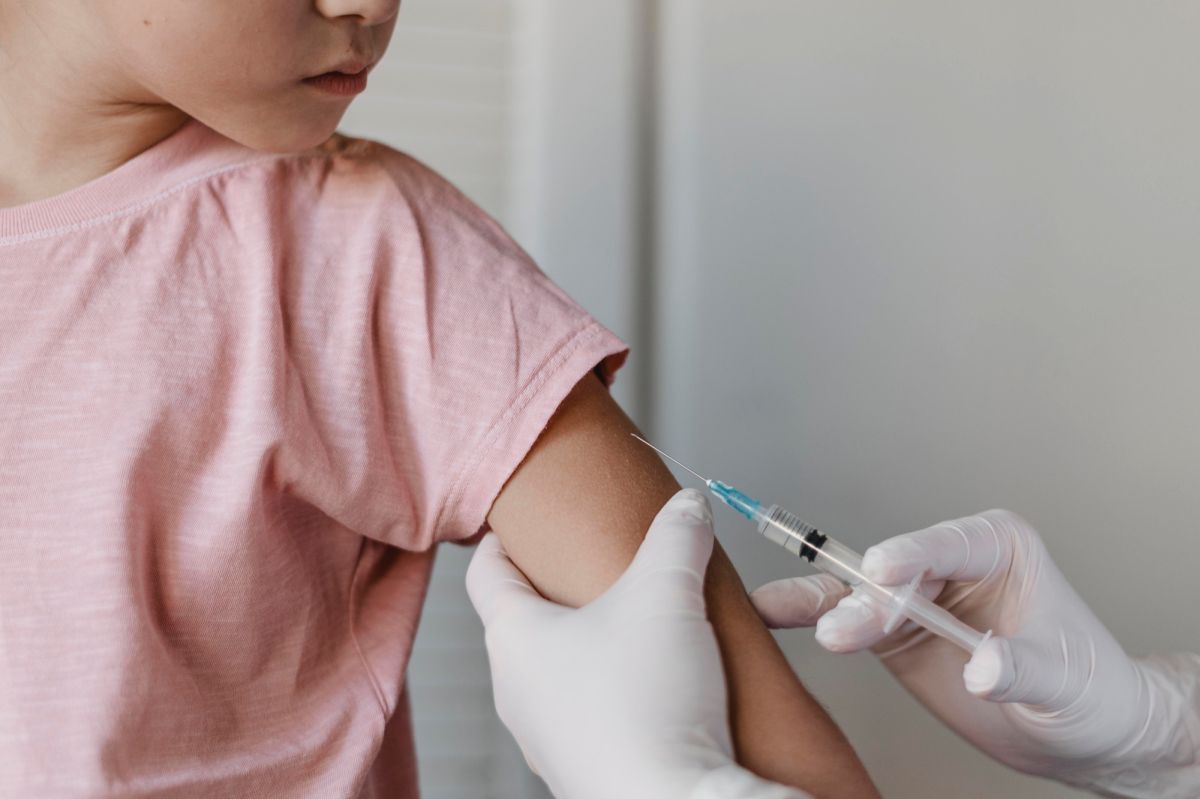
- Vaccines are safe, effective, and essential.
- Autism deserves understanding, support, and acceptance, not blame.
When parents ask me about this issue, I often respond, “Decades of high-quality studies show that vaccinated children are not at higher risk of autism. There is no new evidence to suggest otherwise.
“But unvaccinated children are at risk of serious infections that vaccines can prevent. Your questions are valid, but let’s look at the facts together.”
Parents deserve reassurance supported by science.
In the end, the answer I gave that mother in my clinic remains the same for every parent asking today: No, vaccines do not cause autism.
The science is strong, the evidence is reassuring, and nothing in recent headlines has changed that.
What has shifted is how information is presented online, not the facts themselves.
Our role — as doctors, parents, and a community — is to lean on evidence, support autistic children with empathy, and keep protecting our kids from diseases we can prevent.
Vaccines save lives. That remains unchanged.
The author is a paediatrician and a committee member of the Malaysian Paediatric Association (MPA) and Perinatal Society of Malaysia (PSM).
- This is the personal opinion of the writer or publication and does not necessarily represent the views of Ova.