


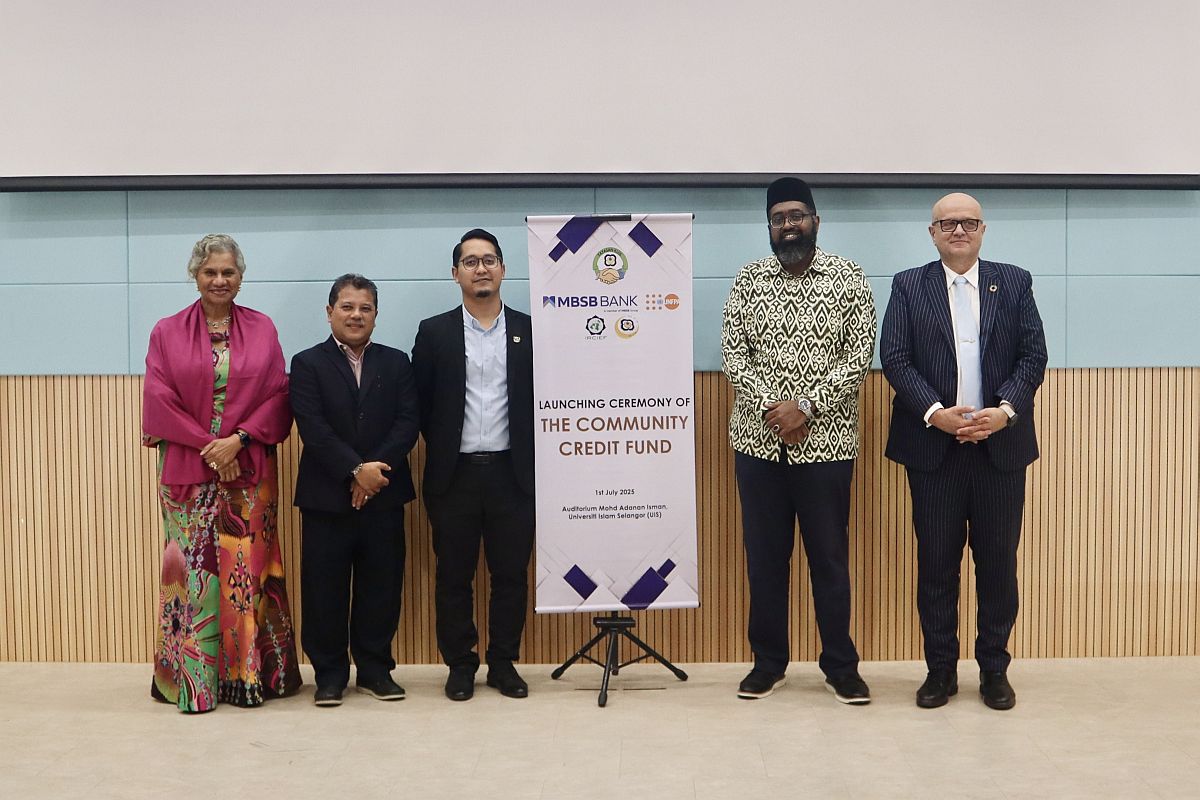
KUALA LUMPUR, July 2 – Yayasan KUIS, in collaboration with MBSB Bank and UNFPA Malaysia, has officially launched its Community Credit Fund, a groundbreaking pilot initiative designed to simultaneously empower disadvantaged youth, address the challenges that come with an ageing nation and empower community outreach.
Through this pioneering programme, essential financial stipends will be provided to students in exchange for their invaluable service to residents in nursing homes, fostering intergenerational solidarity and strengthening community bonds.
The launch event, held at Universiti Islam Selangor (UIS), heard remarks from Ahmad Fatin Mohd Suhaimi, Chief Executive Officer of Yayasan KUIS, Dr Aleksandar Sasha Bodiroza, Deputy Regional Director, UNFPA Asia-Pacific Regional Office, and Ashraf Gomma Ali, Group Chief Shariah and Sustainability Officer of MBSB Bank.
The event also featured a “Voices of the Youth” segment, highlighting student perspectives on this impactful initiative.
Malaysia is rapidly transitioning into an ageing nation, with citizens aged 60 and above projected to reach 15.3 per cent of the total population by 2030, and 20 per cent by 2040.
This demographic shift brings significant challenges in care, often leaving many older persons facing loneliness and inadequate support.
Simultaneously, university students across the country continue to grapple with financial constraints that impact their academic performance and well-being.
The Community Credit Fund directly tackles these dual challenges. By supporting UIS students who demonstrate financial need, the Fund allows them to earn stipends through meaningful community work rather than taking on jobs that may conflict with their studies.
Their services will encompass companionship, basic assistance, and conducting educational activities for elderly residents, enriching their quality of life and providing much-needed social interaction.
“This initiative is more than just financial aid or elderly care; it’s about building a more connected and compassionate society,” said Ahmad Fatin.
“The Community Credit Fund creates a sustainable model where our youth contribute directly to societal well-being, gaining invaluable experience while supporting our senior citizens,” he added.
Ashraf Gomma Ali highlighted that “this programme does more than offer financial support — it nurtures young hearts and instills the values of service and compassion, which are fundamental in Islam”.
As the main sponsor, MBSB Bank is contributing zakat funds to support student allowances under this programme, in line with the Bank’s CSR framework that champions education, youth empowerment, and socially responsible development.
Dr Bodiroza said in his keynote speech, “This pioneering model can serve as an inspiration for similar initiatives far beyond the borders of Malaysia, clearly demonstrating how morally guided and ethically driven financial practices can directly fuel robust socio-economic development and ensure comprehensive equity for all members of society.”
MBSB Bank is the main funder of the programme, while UNFPA Malaysia serves as a strategic and intellectual partner, aligning with its mission to promote youth empowerment and the well-being of older persons.
The International Research Centre of Islamic Economics and Finance (IRCIEF) is the academic partner that will provide monitoring and academic research on the fund, while the UIS Student Representative Body will coordinate student participation and selection.
Yayasan KUIS will manage the programme, ensuring transparency through a robust and integrated monitoring system.
The pilot project will run for 50 weeks, with selected UIS students undertaking weekly service tasks on weekends. Based on the insights and successes of this initial phase, there are plans for continuation and expansion in the future.
This collaborative effort represents a powerful step towards economic empowerment for students and enhanced care for the elderly, establishing a replicable framework for social impact across Malaysia.