

KUALA LUMPUR, Sept 25 — A new independent expert consensus on iron deficiency anaemia (IDA) screening and management in young children across Southeast Asia and India has been developed.
The consensus comes in response to the concerning findings of the Iron Strong Study 2023, which highlighted that one in three Malaysian children are at risk of anemia.
The expert consensus, developed through collaboration with 28 clinicians in paediatrics, obstetrics and gynaecology, family medicines and public health from Malaysia, Thailand, Laos, Myanmar, Cambodia, and India.
The recommendations were independently created and reviewed by these regional experts, supported by Danone.
The consensus presents 12 evidence-based recommendations to guide healthcare practitioners and policymakers in decision making related to screening, prevention and management of IDA in young children.
Prof Dr Muhammad Yazid Jalaludin, consultant paediatric endocrinologist at the Faculty of Medicine, Universiti Malaya, emphasised the importance of the consensus: “The release of this expert consensus represents a significant advancement in managing IDA in children.
“By bringing together leading experts from the region, evidence-based recommendations have been established that can greatly benefit child health.”
This expert consensus demonstrates an independent, expert-led effort to address IDA, reflecting the collective expertise of regional specialists and underscoring a shared commitment to improving child health.
“In addition to the consensus, Danone has introduced the online Iron Strong Screening Questionnaire to further support efforts in identifying and addressing IDA,” said Angie Low, Medical and Nutritional Science Hub Director at Danone Southeast Asia.
“Danone remains committed to supporting these expert recommendations through our ongoing initiatives and partnerships.
“We are particularly focused on scaling up our non-invasive screening programs and providing our nutritional solutions to combat this critical health issue.”
Multi-Pronged Approach To Address Childhood Anaemia
“Iron deficiency anaemia (IDA) in children is often underdiagnosed because mild cases often show no visible symptoms. However, this undetected deficiency can significantly impact growth and even irreversible consequences on a child’s brain development and future learning abilities,” said Dr Yazid.
The panel of experts has advocated for non-invasive anaemia screening annually for all children aged 1 to 5. This strategic approach aims to improve the early detection and management of IDA.
Additionally, it emphasises the importance of nutritional intervention, particularly the fortification of food and milk to help reduce the risk of IDA in all children and actively educates parents and caregivers on IDA risks and prevention.
Despite the alarming prevalence of IDA in Malaysian children, national policy regarding routine screening and intervention remains inadequate.
However, screening is just one part of the comprehensive strategy. A holistic approach to combating IDA in children is crucial.
The expert consensus also underscores the critical role of nutrition in preventing and managing IDA in children.
Prof Dr Hamid Jan, from the Nutrition Programme, School of Health Sciences, Universiti Sains Malaysia, stated, “Addressing IDA in children requires a multifaceted approach that combines early detection with comprehensive nutritional interventions. Incorporating a variety of iron-rich foods into your children’s diets, such as lean meats, poultry, beans or dark leafy vegetables like spinach, is an excellent source.
“Additionally, fortified milk and foods play an important role in ensuring adequate iron intake, especially for children who may have limited access to diverse diets.
“Pairing iron-rich foods with enhancers like vitamin C rich food can significantly improve absorption, making it easier for your child to benefit from their iron intake.”
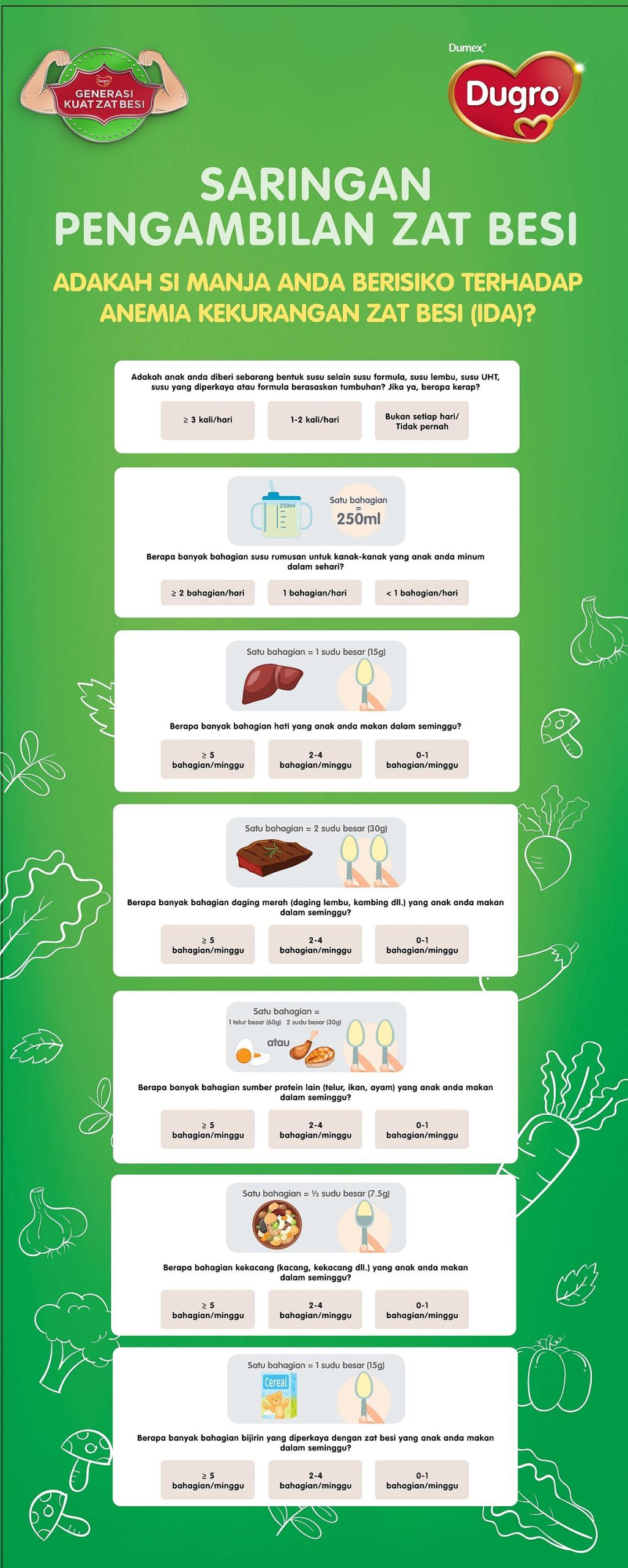
Recognising the need for a holistic approach in combating IDA, Danone introduced the Iron Strong Screening Questionnaire — an online self-assessment tool developed in collaboration with a panel of paediatric and nutrition experts.
This innovative and user-friendly questionnaire empowers parents to assess their child’s iron intake based on age and provides guidance on the types and amounts of iron-rich foods to include in their diet.
Danone’s initiative aligns with the Malaysian government’s Health White Paper, which emphasizes the importance of preventive health measures and multi-sectoral collaboration.
The white paper highlights the need for innovative approaches to address health challenges, particularly among vulnerable populations, which aligns with Danone’s commitment to combat IDA in children.
In line with its One Health Agenda, Danone is expanding its efforts to improve anaemia screening and prevention:
- Providing easy access to the online and QR Code Iron Strong Screening Questionnaire for parents and caregivers.
- Dugro’s Generasi Kuat Zat Besi nationwide roadshow, offering free non-invasive anaemia screening and nutrition education.
- Collaborating with health care providers and the government to integrate non-invasive anaemia screening into routine child health check-ups.
- Delivering innovative and accessible iron-fortified formula products for children, Dugro features Iron Active — a unique blend of iron and vitamin C that aids in 3X absorption, along with DHA and 21 essential vitamins and minerals. Consuming three glasses of Dugro daily provides 100 per cent of the recommended iron intake.
“As we continue to uncover the significant prevalence of anaemia among Malaysian children, it becomes increasingly clear that early detection and intervention are crucial.
“By integrating relevant recommendations based on current clinical data and best practices, the consensus intended to assist decision-making for the screening, management, and prevention of IDA among children.
“By addressing the risk factors early, particularly through nutritional education and routine screenings, we can mitigate the long-term impacts of anaemia on children’s growth and brain development,” said Dr Yazid.