

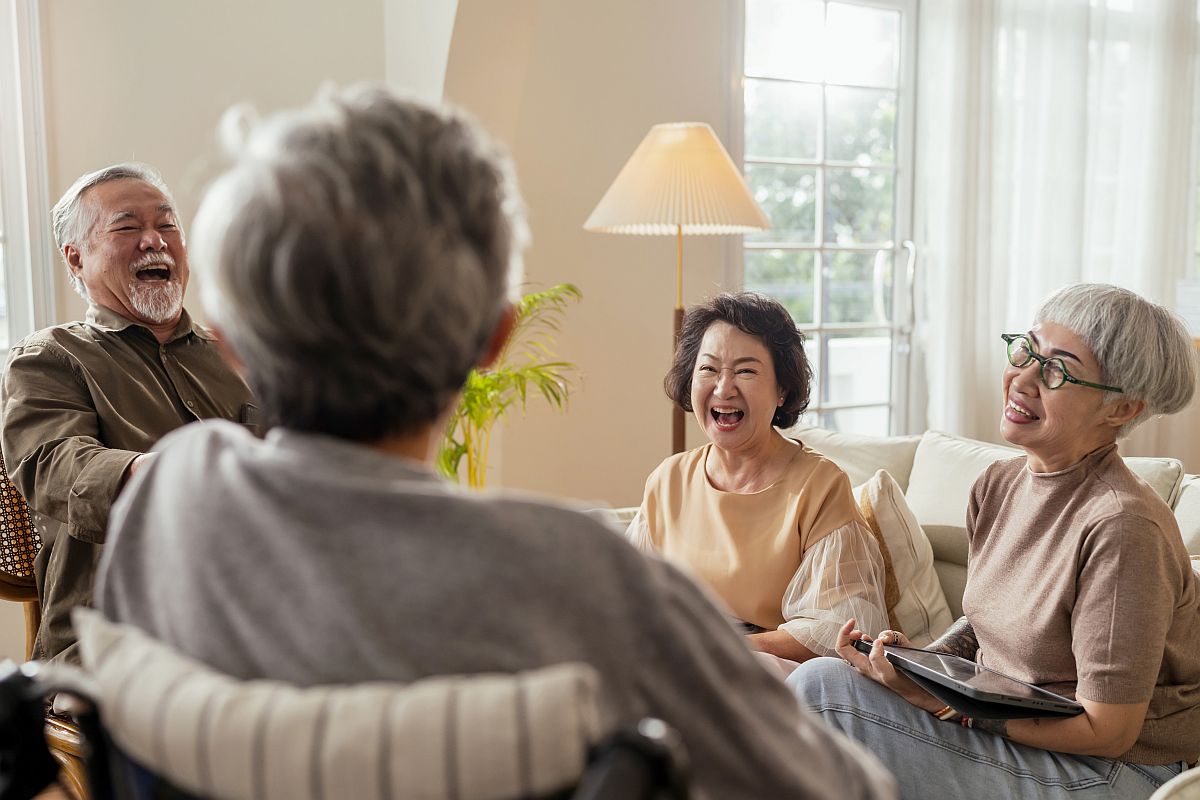
This year, the Malaysian government will begin rolling out the 13th Malaysia Plan (RMK13), which outlines comprehensive strategies designed to prepare the nation as it begins its transition into an aged nation.
As an ageing nation, Malaysia recognises the critical importance of taking immediate and proactive measures to meet the impending challenges of its demographic transition.
The recently released RMK13 and the upcoming National Ageing Blueprint (NAB) contain well-articulated strategies for long-term care and social protection.
Strengthening the care ecosystem was identified as a critical strategy, alongside improving the quality and professionalism of its talent, expanding community-based care for children, disabled and elderly people and exploring long-term care insurance schemes, as practiced in other ageing nations around the world.
These strategies are necessary and commendable as the population ages and care burdens rise.
However, there is a way Malaysia can further streamline its efforts and reap the benefits of a second demographic dividend, and that is by centering gender within its approach to ageing — specifically through employing a life-cycle approach to policymaking.
Understanding The Life-Cycle Approach
A life-cycle approach takes into account how our health and well-being are shaped by a series of interconnected stages, from before birth, through infancy, childhood, adolescence, adulthood, through to older age.
The framework takes into consideration the interplay of biological, psychological, social, and environmental factors across these stages, which is especially crucial in the context of demographic changes like population aging.
The great advantage of a life-cycle approach is that it starkly reveals how ageing is not a gender-neutral experience.
Gender plays a central role in how an individual experiences different life stages — persistent gender inequalities can influence the health and well-being of individuals at different life stages, the opportunities they receive across the life cycle, and ultimately their physical and material welfare in old age.
Ageing And Gender
Men and women do not experience aging the same way. According to the Malaysian Ageing and Retirement Survey (MARS) conducted by Universiti Malaya’s Social Wellbeing Research Centre, women in Malaysia live longer than men, surviving to an average of 78 years. However, they do so with significantly fewer resources, and in poorer health.
Female-headed households among the elderly are also disproportionately represented in the B40 group, often surviving on nearly half the mean income of their male counterparts.
The vulnerability of older women is not an accident of nature, but the cumulative result of a lifetime of gender inequality.
Addressing the challenges of an ageing nation necessarily demands us to address gender inequality, because the two are inextricably linked.
Compounding gender inequalities across the life cycle can lead to poorer outcomes in old age.
Applying a life-cycle approach, we can see how cultural norms that overwhelmingly place the burden of care work onto working-age women (including caring for children and elderly parents) lead to interrupted careers, lower Employees Provident Fund (EPF) savings, and a lack of formal pension coverage in old age.
Poor access to sexual and reproductive health services and education for adolescents can also lead to teen pregnancies and child marriages, with knock-on impacts on their educational and career attainment, and ultimately their financial welfare as they age.
Discrimination, stigma against working mothers and gender based violence across a woman’s life cycle also impacts their ability to participate fully in education, the labour force and public life more broadly.
These are not “women’s issues” with limited impact on only a certain subset of the population.
Women make up half of the nation’s population, and consequently the impacts of gender inequality have a direct impact on the welfare of families, communities, and entire countries at large.
When women are unable to participate in the labour force due to existing structural inequalities, the country loses out on untapped economic potential.
Tapping into this hidden economic powerhouse is what will drive Malaysia’s growth and development through its demographic transition.
Not to forget that women also make up the majority of the care workforce. Addressing gender inequalities (including closing the gender wage gap, recognising unpaid care work and women’s “double burdens” and cracking down on gender based violence) inevitably strengthens the care ecosystem, which is vital for sustaining an ageing population.
2026: The Year To Watch
The next five years are the “final sprint” for the Sustainable Development Goals (SDGs) ahead of the 2030 deadline.
It is also a pivotal moment for international cooperation, as seen in the recent inaugural Asean-UNFPA Forum on Population Dynamics and Development, held last November in Kuala Lumpur.
The forum underscored a vital lesson: gender equality is the key to unlocking reproductive agency and inter-generational solidarity.
To “raise the floor” for all Malaysians, national policies must embrace gender mainstreaming.
What this means in practice is truly recognising the knowledge, experience, lived realities and needs of both men and women, and reflecting that in the policies we design and the projects we embark on.
In the context of an ageing Malaysia, the life cycle approach seamlessly embodies this.
The “fertility dilemma” and “ageing dilemma” are two sides of the same coin. Under the lifecycle approach, investing in SRH education, maternity protections, childcare, and elderly care today will also be a direct investment into the financial security of tomorrow’s older women.
We also cannot make true progress on gender equality and dignified ageing without comprehensive gender-disaggregated data.
We cannot fix what we do not measure. As such, all ageing-related metrics must be disaggregated by gender to ensure targeted interventions reach those most at risk.
Walking Together
UNFPA has accompanied Malaysia’s development journey for 53 years, from the days as a young nation with high fertility, to the current status as a rapidly ageing society.
At the end of the day, effectively addressing ageing demands more than building child care centres and nursing homes; it demands a fundamental shift in how we value women’s contributions across their entire lives.
2026 is the year to watch. As we embark on the 13MP and the next UNFPA Country Programme cycle (2026-2030), let us work towards a future where every Malaysian, regardless of gender, can age with dignity.
Dr Julitta Onabanjo is the United Nations Population Fund (UNFPA) in Malaysia Representative and Country Director of UNFPA in Thailand.
- This is the personal opinion of the writer or publication and does not necessarily represent the views of Ova.