

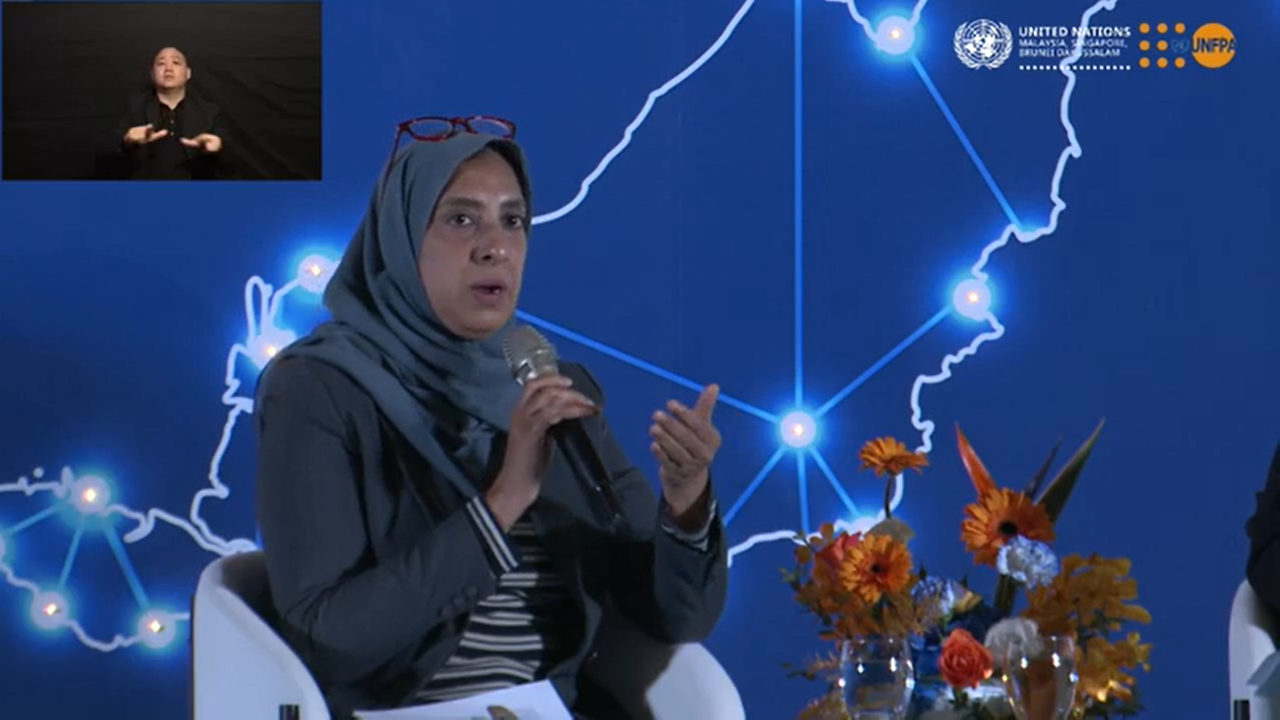
KUALA LUMPUR, Jan 15 – Despite not having to legally struggle to obtain basic rights like women in other countries do, Malaysian women are still severely shortchanged when it comes to gender equality, said Latheefa Koya, co-founder and advisor of Lawyers for Liberty.
In her keynote address at the Malaysia Women and Girls Forum 2024 last December 12, Latheefa said that the rights afforded to Malaysian women “are incomplete and the discriminatory nature of the system is blatant.”
She cited the Constitution (Amendment) Bill 2024 as a perfect example demonstrating that “not only has the government not tried to implement gender equality, but they’ve tried their very best to retard its application.”
“When these mothers brought their case to the courts to fight and change these medieval laws, who do you think fought against them? The successive governments of this country.”
“After having conceded to the pressure and amending Sections 1(b) and 1(c) of the constitution, the government still managed to find a way to punish the mothers and perpetuate gender imbalance by deliberately not making these amendments retrospective.
“As you can see now, after self-praising, much celebration, for having passed these crucial amendments to include mothers in the relevant citizenship provisions under Part II of the Second Schedule of the Federal Constitution, not one person alive can benefit from this amendment.”
The Constitution (Amendment) Bill 2024, which was passed in the Dewan Rakyat on October 17 and Dewan Negara on December 3 last year, finally granted Malaysian mothers with foreign spouses the ability to confer automatic citizenship rights to their children born overseas, but with a caveat; the amendment is only applicable to those born after the amendment is gazetted.
Before the passing of the bill in Parliament, only Malaysian fathers could automatically confer citizenship rights to their children born abroad. The amendments on Section 1(b) and 1(c) of Part II of the Second Schedule replaces the word “father” with “parents one at least”.
However, since the amendment does not apply retroactively, those born before the bill comes into force will still not have automatic citizenship and will have to apply for it.
“Only the future unborn may benefit. And this sordid tale of hopes raised and hopes betrayed is a classic example of gender inequality in the law. Only those who are dead to all human feelings will not be enraged by all this,” said Latheefa, who is the former chief commissioner of the Malaysian Anti-Corruption Commission.
Other Regressive Provisions In The Constitution Amendment Bill

In a Q&A with Latheefa after her keynote speech, Brenda Rangithan, co-chair of the Gender Equality & Diversity Committee, KL Bar, pointed out that a number of retrogressive amendments were also made to the amendment bill.
This includes that a foreign wife’s Malaysian citizenship can be revoked if her marriage to a Malaysian ends within two years of her becoming Malaysian. Prior to this, the stipulation was that the Malaysian government may rescind a foreign wife’s Malaysian citizenship, if her marriage to the Malaysian ends within two years of them marrying.
“There are a lot of views that this amendment would actually force women to stay in dangerous marriages, which causes a lot of issues for the families and even the children involved,” Brenda said.
She also brought up that under the amendment bill, children born to permanent residents in Malaysia will no longer be entitled to automatic citizenship.
“They will now need to apply. And of course, child rights activists have commented that these issues would affect orphans, children born out of wedlock who may even have Malaysian fathers who refuse to acknowledge them.”
Issue Of Stateless Children Unresolved
Latheefa said while they were pushing to pass the bill, the government used the opportunity to “sneak in a few more provisions and remove other provisions to make it worse.”
“And what that means is, in the future you are going to expect literally thousands more kids who are born in Malaysia to be rendered stateless. And we don’t understand where this is coming from, but it is cruel.”
“To say that you did not realise it, that would be a lie. Because there were many discussions, many debates, many articles that were written, pleading not only to the ministries, the prime minister, but also to the women MPs as well.”
Latheefa added that toeing the party line cannot be used as an excuse because the issue was used to gain votes and support from voters and the public. “You can’t turn around and tell mothers and potential victims of these amendments that I have to follow the party line, there’s a whip.
“That is not what you (said) in order to get their votes and support. So then you turn around and say, you have to understand us because we are stuck and this has to go through the party.”
She said ignorance of its implications also cannot be justified as the reason for the retrogressive provisions in the bill.
“These amendments did not just go through the Dewan Rakyat, it went through a few discussions, through select committees, through cabinet meetings, and within the cabinet meetings, we are fully aware of members of the cabinet who have spoken out on these issues. So to say that they are not aware, I think that would be a lie.”
She said the bill has not resolved the issues of gender inequality and stateless children, adding that there is now “a dark future for many unborn children and even the ones who now basically have no hope as far as if one of their parents is a permanent resident.”
As a result, any reassurance by the government now rings hollow. “What is your solution? The answers that are given are: trust me bro. The answers that are given are: that we will have rules and SOPs, which will make sure that there will be a process and the minister will use his discretion.
“That is not a solution, that is not a right, that is just basically a political assurance,” said Latheefa.