

For children, hospitals can be daunting environments filled with unfamiliar sights, sounds, and procedures.
Research has found that over 90 per cent of children aged 4 to 6 have expressed fears related to hospitals, with concerns primarily revolving around nursing interventions and being a patient.
Similarly, two primary themes of fear were highlighted: the ward environment and medical staff, as well as apprehension about treatments and procedures.
This issue is prevalent among Malaysian children as well, where some exhibit significant resistance to even leaving home at the mention of a hospital visit.
In that aspect, humanising health care through education, empathy, and play is proving to be a transformative approach in making pediatric medical environments more child-friendly and inclusive.
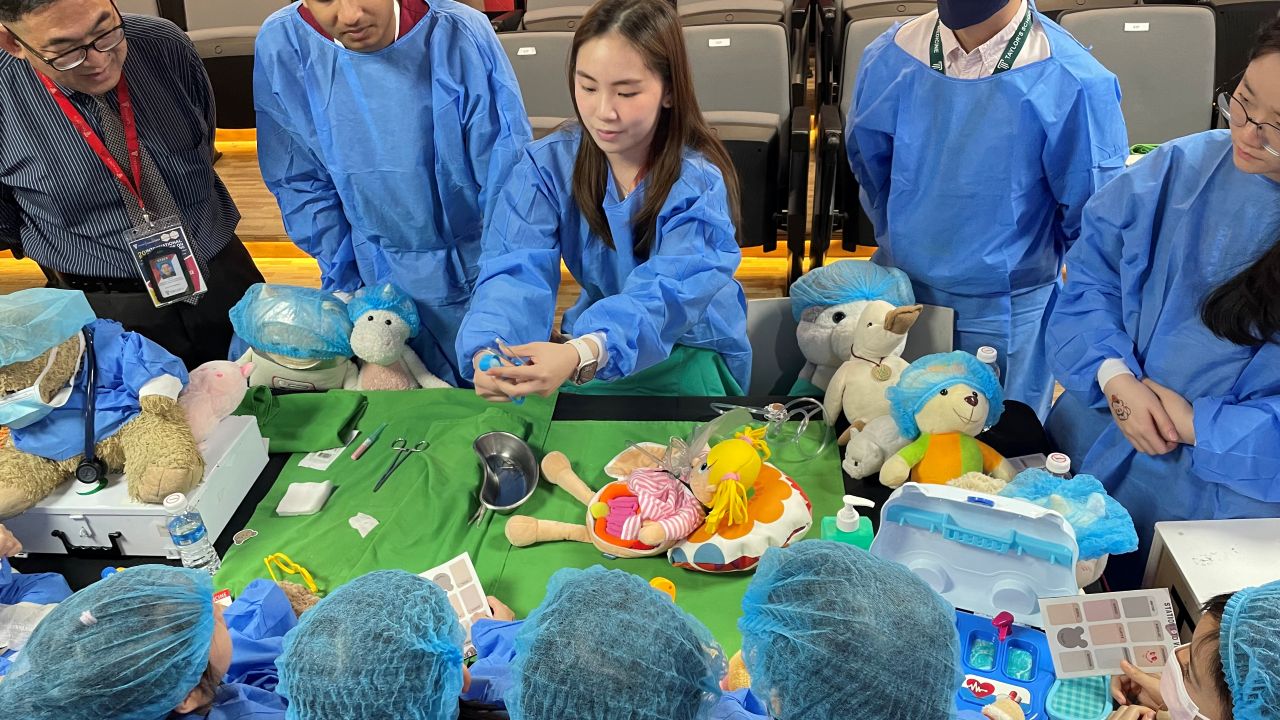
Initiatives like the Teddy Bear Hospital, organised by Taylor’s University’s Digital Health and Medical Advancements Impact Lab, School of Medicine, and School of Education aims to alleviate children’s anxieties surrounding health care by creating a safe and playful environment where children can interact with medical tools and learn about health care processes in a non-threatening way.
The event, which involved 65 young participants aged between 5 and 6 years old, 15 teachers, 85 student volunteers, and 25 staff members from various disciplines, saw children bringing their favorite furry toys to a simulated medical setting.
The interactive setting witnessed medical students who acted as doctors, while the children played caregivers for their “sick” toys.
Through this roleplaying, children were introduced to health care procedures in a fun and non-threatening manner.
Featuring a variety of engaging activities, the event emphasised how play is an innate part of childhood and can serve as a powerful tool for both healing and learning in medical contexts.
Among them included an Anatomy Station where children explored basic anatomy and organ functions through interactive sessions.
They observed X-ray images to learn about diagnostic imaging, practiced proper handwashing to understand hygiene’s role in infection prevention, and participated in simulated surgery on teddy bears to experience the operating room.
Other highlights included learning about injuries and casts (POP), understanding the importance of vaccinations in a mock immunisation session, exploring dental health through brushing and flossing demonstrations, and discovering healthy eating habits.
These activities helped foster understanding and reduce anxiety by demystifying medical care, allowing health care professionals to explain complex procedures in a simplified, engaging way that resonates with young minds.
Cuddly toys serve as comforting emotional anchors, allowing children to feel secure as they navigate the experience.
Many children described their toys as non-judgmental companions, offering support in ways that even adults could not.

Hospital play interventions like the Teddy Bear Hospital have been widely acknowledged as effective tools for preparing children for medical procedures.
They provide a space for young patients to confront and manage their anxieties while also familiarising them with health care environments.
Moreover, these programs offer invaluable learning opportunities for medical and educational students by enhancing communication skills through age-appropriate interactions with children in a non-clinical setting.
It fosters empathy and bedside manners, encouraging sensitivity and compassion in patient care.
Students gain hands-on experience with basic medical procedures, boosting clinical skills and confidence.
The success of the Teddy Bear Hospital underscores the power of collaboration between universities, medical and educational professionals, and families.
The initiative fosters trust and understanding in pediatric health care while building a community-driven approach to better care.
Such programmes are reshaping pediatric health care by advocating for child-friendly environments and prioritising the emotional wellbeing of young patients, with the aim of building a generation that views hospitals not with fear but with trust and confidence.
By breaking down psychological barriers and fostering empathy, humanising health care becomes more than just a trend; it becomes a necessary shift towards creating environments where children feel safe, supported, and understood.
Prof Chong Pei Pei is the director of the Digital Health and Medical Advancement Impact Lab, and Assoc Prof Dr Khine Pwint Phyu is a Hub Leader within the same lab at Taylor’s University. Dr Lim Yin Sear is a senior lecturer at the School of Medicine, Faculty of Health and Medical Sciences and Revati Ramakrishnan is a Senior Lecturer at the School of Education, Taylor’s University.
- This is the personal opinion of the writer or publication and does not necessarily represent the views of Ova.