
KUALA LUMPUR, Oct 15 – A report by UNICEF and UNFPA published last year found that factors contributing to adolescent pregnancy in Malaysia include lack of information about sexual and reproductive health (SRH), barriers to SRH information, services and supplies, patriarchal norms, and marriage practices to protect a girl and her family’s reputation.
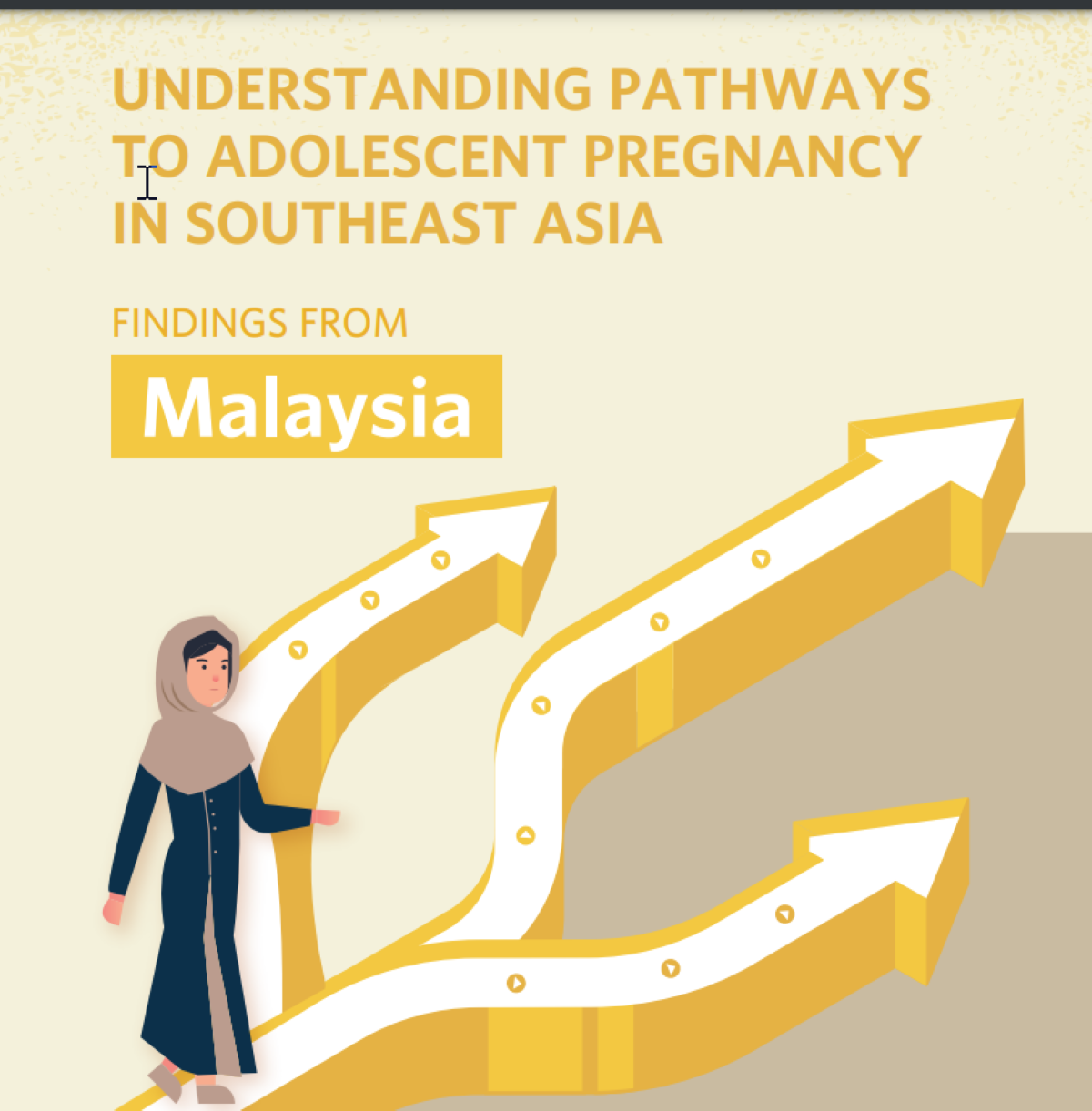
The study identified six pathways to adolescent pregnancy, which are broadly mapped out in Figure 3 (below). The pathways were differentiated primarily by timing of pregnancy relative to union, that is, outside- or within-union pregnancy.
Within these broad categories, pathways were further differentiated by the nature of sexual relationship that led to pregnancy (consensual, pressured or forced sex), pregnancy intention (planned or unplanned), and where applicable, who initiated union (couple- or parent-led).

The study involved two stages of data collection involving adolescent girls aged 16 to 20 who experienced pregnancy or birth at age 18 or younger.

For the first stage of data collection, in-depth timeline interviews were conducted with 45 girls from the stipulated age group between May 2021 and April 2022.
According to the report, interviewers used a semi-structured interview tool to guide participants to reflect on key life events and milestones in their journey to becoming pregnant.
Following preliminary analysis of the data gathered through the in-depth timeline interviews, follow-up phone interviews were conducted with 10 selected participants.
The purpose of the follow-up interviews were to validate and clarify the study findings and interpretations, and gather programmes and policy recommendations from the girls.
Participants comprised girls of Malay and Orang Asli (indigenous) ethnic backgrounds. More than half of the participants were from Pahang state, with the rest residing in Kuala Lumpur and Selangor state.
According to the report, Pahang was chosen to capture a setting of high adolescent fertility and premarital conception, and Selangor, containing the nation’s capital city Kuala Lumpur, was selected as a setting of median adolescent fertility and premarital conception.
Site selection was based on the most recent adolescent pregnancy statistics by province in Malaysia, as well as access to health care services and the presence of non-governmental organisation (NGO) partners that were able to facilitate the identification of pregnant adolescents for recruitment.
Marital, Educational, Employment Status Of Participants
Over half of the girls were not married at the time of the interview. Most girls (27) had at least some secondary education, with most having left school by Form 3, and 10 girls leaving in Form 4.
Seven girls had only primary education. Ten girls were high school graduates, and one girl had attended some higher (tertiary) education.
Only five participants were engaged in paid work at the time of their interviews, and about a third of participants were sent to live in shelter homes following pregnancy (18 were living in shelter homes at the time of their interviews, five previously lived in shelter homes but had since been discharged).
Most girls (34) reported receiving antenatal care, with about half of these girls reporting that antenatal follow-ups were facilitated by the shelter homes in which they were living during pregnancy.
Sex Ed In Malaysia Limits Access To Comprehensive SRH information
The study found that across the sample, many girls lacked knowledge about SRH topics (such as sex, reproduction, pregnancy and contraception) before pregnancy.
According to the report, this is consistent with prior research citing adolescents’ lack of knowledge about SRH in Malaysia.
This is due to sexuality education in Malaysia being mainly focused on abstinence-based, risk-based messaging, which limits young people’s access to essential comprehensive SRH information.
It does not account for the reality that young people are having sex, and many are not waiting until marriage or union to do so.
In the study, most girls reported receiving some information about sex, reproduction and pregnancy in science, health, or religious classes at school, but levels of awareness and understanding varied.
This variation could be partly due to the different levels of education that girls completed.In a few cases, the participants reported missing out on learning about SRH in school settings because they had left school early for other reasons.
According to the report, the variation in levels of awareness and understanding of SRH is likely also being influenced by prevailing misconceptions that sexuality education is only important for certain groups of adolescents (e.g. LGBTQIA+ persons, sexually active young people, and rape victims) as opposed to all young people.
Some girls in the study believed that the SRH information they received at school was not relevant to them at the time or they were simply “not interested” in the information.
In other cases, participants reported that girls who were interested to learn about SRH were shy to ask questions because they were afraid of being stigmatised.
Myths, Misconceptions, Shyness Prevent Girls From Using Contraception
According to the report, girls’ lack of SRH knowledge was evident in some of the myths and misconceptions about contraception that they shared, which prevented them from accessing and using contraceptives.
A few girls expressed fears about contraceptives “causing infertility”, which they had usually heard from peers.
Others did not think they would or could get pregnant or believed that withdrawal was effective for preventing pregnancy.
Among follow-up interview participants, a disparity was also observed in married and unmarried girls’ perceived barriers to contraceptive access.
For example, a married girl felt that she had no barriers to access, as her husband bought contraceptives when they needed or wanted to use them, but the situation would be much different for girls whose husbands do not support contraceptive use.
On the other hand, an unmarried girl noted that it is difficult to get some contraceptives from government-run health facilities (choices were limited to pills or injections only), and another unmarried girl reported feeling shy to buy contraceptives at public places, such as pharmacies.
In addition, another girl explained that girls usually feel shy to buy contraceptives over the counter because they are worried about what other people will think.
In other cases, participants noted that another barrier to access was that some girls do not know how to use or where to get contraceptives, which can also be linked to their lack of SRH knowledge.
Girls’ lack of SRH knowledge and barriers to accessing contraceptives help explain why most girls in the study did not use any modern method of contraception before their first pregnancy, even when they were sexually active and did not want to get pregnant.

However, as pointed out by a follow-up interview participant, some girls are aware of contraceptives but do not think about using them when it comes time to have sex.
According to the report, the findings suggest that interventions aimed at preventing adolescent pregnancy will need to address girls’ (and boys’) knowledge gaps alongside barriers to contraceptive access and use at individual, relationship, community and societal levels.
Harmful And Misguided Methods Of Abortion
Following unplanned pregnancy outside of union, seven girls in the study considered abortion.
Some of these girls attempted to induce abortion through a range of approaches, some of which were based on myths and misinformation (e.g. eating pineapple, drinking soda), and some that could have caused the girl harm (e.g. throwing herself down a flight of stairs).

In Malaysia, abortion is legal to save a woman’s life and to preserve the physical and mental health of a woman, and one girl in the study sought abortion services from a clinic but was turned away.
It will be important to improve timely access to sensitive and comprehensive health services care (including post-abortion care) and identify and address barriers that adolescent girls face in accessing legal abortion care, noted the report.
Patriarchal Norms Limit Girls’ Agency, Decision-Making
The girls in the study had varied levels of agency and decision-making power at various points in their timelines (e.g. deciding whether and when to have sex, use contraceptives, and what to do following unplanned pregnancy outside of union).
The findings highlight the persistence of patriarchal values that uphold male authority and dominance within intimate relationships.
Though there were no reports of marital rape in the sample, during follow-up interviews, participants reported that girls and wives are not allowed to say “no” to their partners or husbands when they ask for sex.
Beliefs such as this are reinforced by current legislation (Malaysian Penal Code Section 375), as marital rape is not currently considered a crime in Malaysia.
In addition, while most of the girls in the study had consensual sex in the context of romantic or casual sex relationships or union, a minority of girls (8) described experiences of forced sexual debut outside of union, some perpetrated by boyfriends, and a few by male relatives.
Rape (statutory and non-statutory) and incest are punishable by law under the Malaysian Penal Code Section 375.
Yet, only one of the girls who experienced forced sexual debut reported that her family filed a police report of the rape, indicating that there may be barriers to pursuing legal action following experiences of sexual violence that need to be explored further.
In terms of contraceptive decision-making, male partners and husbands also had more decision-making power.
A few girls were able to access and use modern contraception prior to pregnancy, but during follow-up, girls noted that their partners and husbands were responsible for purchasing contraceptives and making decisions regarding contraceptive use.
They also noted that there are instances when partners and husbands do not agree to use contraceptives.
Patriarchal norms were also evident in girls’ accounts of decision-making following an unplanned pregnancy outside of marriage (pregnancy resolution).
According to the study, girls had varying levels of agency regarding whether to raise their baby on their own as a single parent, give their baby up for adoption, or pursue union and dual parenthood with the partner who got them pregnant.
Under the Malaysian Child Act 2001, adolescent girls (aged 10 to 18) who engage in sex outside of marriage can be legally considered as “children beyond control”, and their parents can submit a written request to the Court of Children for the girl to be admitted to institutional care because they can no longer “manage” the girl.
Girls Had Little Or No Real Say In Pregnancy Resolution
Many girls in the sample were admitted to shelter homes by their parents or families following pregnancy. In these settings, it was clear that girls often gave up decision-making control to their parents (usually led by the father) and had little or no real say in pregnancy resolution (i.e. adoption, single parenthood).
In some cases, girls were also pressured or forced to end their relationship with the romantic partner who got them pregnant, even when the couple wanted to remain in the relationship.

While shelter homes aim to provide protection and support for girls, research has found that girls experience poor social support and mental health outcomes while living in shelter homes.
Legal and social policy frameworks need to balance protecting adolescents from harm with supporting and promoting adolescents’ autonomy.
Marriage To Protect Girl, Family’s Reputation Facilitate Adolescent Pregnancy
In most cases in the study, adolescent pregnancy gave way to child marriage and early union.
Marriage to protect a girl and her family’s reputation was sometimes deemed necessary by the girl’s family following an unplanned pregnancy.
However, for 14 girls, child marriage facilitated adolescent pregnancy. In a few cases, marriage was initiated after a girl was caught in a room with a man.
Among girls in the study who entered unions, regardless of timing relative to pregnancy, the median age at marriage was lower among girls who entered parent or partner-led unions (15 years) compared to girls who entered couple-led unions (17 years).
Additionally, most girls in the study did not enter unions following unplanned pregnancy outside union, some by their own choice.
The findings suggest that when girls have a say in the decision to marry, they may choose to marry later (or choose not to marry) compared to if the decision was made for them.
During follow-up interviews, girls conveyed that parents, especially fathers, usually determine when it is suitable for a girl to get married.
A few participants, however, felt that some girls have some control over who they marry, which was true for some girls in the sample.
Some participants felt that girls should marry young if they have a boyfriend and are ready, whereas other girls did not agree and believed that such marriages are usually forced and could lead to more complicated consequences for girls.
The findings show the persistence of harmful gender norms that view child marriage as a pre-emptive measure against “sinful” premarital sex and a “solution” to out-of-wedlock pregnancies.
Girls’ Guide To Better SRH Practices, Policies, Programmes
In the follow-up interviews, the participants provided the following recommendations on how to help girls like them:
Teach Girls About SRH And Related Topics
Participants expressed that girls need and want information about contraception, boundaries between men and women, abstinence, how pregnancy occurs, fertile period and prevention of pregnancy.
When asked how they would like to receive this information, they said they preferred to learn from their partners, female family members, friends, schoolteachers or counsellors, social media and other online platforms.
The report noted that this indicated a need to employ an approach to comprehensive sexuality education (CSE) that spans socio-ecological levels. Girls recognise the need to improve knowledge about SRH and contraceptives to improve contraceptive use.
Create A Supportive, Enabling Environment To Access SRH Information, Services, Supplies
Some girls suggested that it would be good to sell contraceptives online (e.g. Shopee) to avoid embarrassment associated with buying contraceptives in person over the counter.
Aside from needing more SRH and contraceptive information, girls expressed that they also need the support and understanding of their partners, friendly staff, and easy access to contraceptives, such as through online shops.
Empower Girls With Guidance So They Can Have More Say In Their Relationships
To help girls have more control over if and when to have sex and get pregnant, participants said that girls should learn or be taught how to say no if they do not want to or are not comfortable engaging in any sexual activity.
They felt that girls should think thoroughly if they really want to engage in sexual intercourse and make efforts to learn from those who have experience.
To achieve this, it would help if they were guided to make prior plans and reflect about pregnancy.
They also noted that girls should be able to discuss with their partner or husband if they should or should not engage in sexual intercourse, and subsequently, if and when they want to get pregnant and start a family.
This indicates a need for assertiveness and life-skills training for girls, and also initiatives that help young people build healthy relationships and encourage communication between young couples.
Ensure Girls Receive Guidance, Support Following Experiences Of Sexual Violence
Participants said that girls who experience rape should be guided and supported by police, doctors, hospital staff, counsellors and protection or shelter home staff on how best to handle their situation.
Aside from this, they said that moral support from family members is important to girls, as is religious practice and spiritual guidance.
Provide Parenting Classes, Financial, Moral Support
When deciding what to do following pregnancy, participants felt that girls need parenting classes and financial support, as well as moral support from family members and friends.
According to the report, support from family members and their trusted circles is very important for the girls, so they will be able to discuss and share their worries and concerns and to keep them calm.
In cases where girls give up their babies for adoption, some participants felt that adopted families should make an effort to maintain contact between the girl and their baby.