
KUALA LUMPUR, August 25 – Period poverty is not limited to the inability to afford menstrual products, it also refers to lack of menstrual education, privacy, and facilities that enable good menstrual practices that are healthy, hygienic, and safe.
Overall, these deficits greatly jeopardise the rights of girls and women to menstrual dignity, denying them a fundamental human right that can result in harmful repercussions on their development, opportunities, health, safety and future.
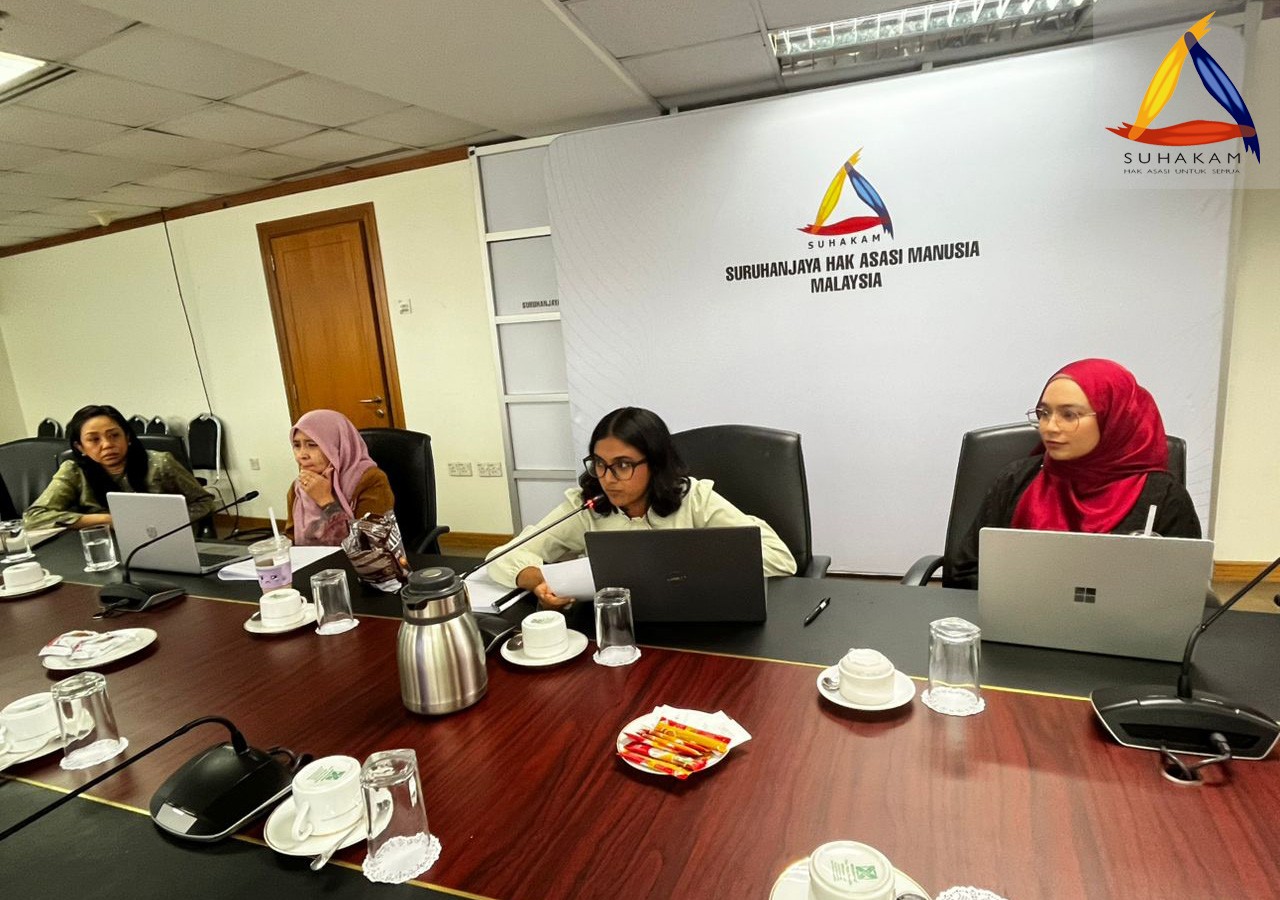
A report by Suhakam released earlier this month explores the threats to dignified menstruation in the country and provides recommendations for how these issues can be addressed.
Prohibitive Costs Of Disposable Pads

Disposable sanitary pads, which are the most commonly used menstrual product among female individuals in Malaysia, can be prohibitive for low-income women and girls.
At the online launch of the report last August 1, Sahanah Kathirvelu from Suhakam, who co-authored the report, said an interview was conducted with a stakeholder who works closely with girls from rural communities, as well as indigenous girls and women.
“The issues that were brought up were issues relating to infrastructure, how they are living in a remote place where access to disposable sanitary products is very difficult, and how the price is also very expensive, because when we have resellers going and selling there, the prices are often hiked up,” she said.
The average price of disposable pads in the country ranges from RM0.40 to RM1 per pad. In its report, Suhakam provides an overview of the prices of winged pads available online at Watsons as follows:

While the table is not an exhaustive list of the different brands and types of pads in Malaysia, and prices may vary depending on store and location, it provides a conservative estimate of how much a woman might have to fork out per month to meet her menstrual needs.
There is no universal guideline on how many disposable pads a woman needs per day as it depends on each person’s amount of menstrual flow, according to the report. In general, pads should be changed every four to six hours.
Based on the table above, a woman might spend around RM4 per day on pads, assuming she changes her pads four times daily. If she menstruates for a week, she would have to pay RM28 per month on pads.
In a household earning the minimum wage of RM1,700 with four women menstruating, the total cost of pads would reach RM112 per month, which is about 7 per cent of their income.
This represents a significant financial burden on a family’s budget, especially when there is more than one girl or woman in the household, noted the report. Furthermore, it would cost more for women and girls in Sabah and Sarawak.
Rather Be Pregnant Than Menstruating

Dr Hannah Nazri, academic clinical fellow in Obstetrics and Gynaecology at the National Institute for Health and Care Research (NIHR) in the United Kingdom, said that about 46 per cent of young girls in rural areas in the country do not have adequate access to sanitary products.
“Some teenagers and stateless women prefer to be pregnant over dealing with menstruation expenses, which of course is a false economy,” she continued.
“And when we talk about urban period poverty, it may come in a way that’s similar to what happens in rural areas. For example, women would rather become pregnant than buy period products, or would rather fast than buy period products.
“But that doesn’t mean that they can’t afford it. From reading and from talking to women, it’s most likely because within the household, period products are not seen as a priority.
“It is seen as a women’s issue. It’s seen as something that we don’t talk about. There are other apparently more important things in the household, and therefore they budget for those things, but not budget for essential menstrual products.”
The trivialisation of women’s needs and issues is symptomatic of the larger problem of systemic patriarchy, which silences the voices of women and undermines their concerns and problems as fringe issues that do not warrant urgent attention.
When in fact, women’s issues are closely linked to broader concerns that have profound implications on societal development and economic growth.
The lack of proper menstrual education and menstrual products have far-reaching consequences as it presents a barrier to education for girls, which can limit their future opportunities, perpetuating cycles of poverty and inequality.
High Rate Of School Absenteeism Due To Menstruation

Anja Juliah Abu Bakar, Social Impact director of Athena Empowers, a social enterprise that provides menstrual products and education to girls in rural communities, said that in 2012, 15,000 Malaysian girls missed five to seven days of school a month, resulting in 60 to 84 days of absenteeism in a year.
“So, the problem is when girls have no access to sanitary products, they miss 60 days of school in a year and it affects educational outcomes – they don’t have interest to study, low achievement in school, which also results in low academic performance and leads to high dropout rates in school.”
The report cited a study that found girls who stay in school throughout their adolescence are less likely to experience teen pregnancy, early child marriage and sexual harm.
Inadequate Menstrual Education In School Curriculum
Access to comprehensive menstrual education before the age of nine is essential, especially as some girls begin experiencing menarche as early as that age.
Providing menstruation education to pre-menarche primary school girls ensures they are well-informed and prepared to manage their menstrual health effectively, according to the report.
This education should not be limited to basic biological explanations; it should also incorporate practical guidance on hygiene and emotional health related to menstruation.
However, the existing curriculum in public schools that covers menstrual education is catered for pupils in Standards 4 and 5, within the topic ‘Kesihatan Diri dan Reproduktif’ (Personal and Reproductive Health), according to the report.
Given that girls nowadays reach menarche as early as eight-years-old, there is a need to introduce menstrual education at an earlier age, it argued. The report also noted that menstrual health education in schools was minimal, frequently limited to biology lessons that fail to address the practical or emotional aspects.

“As an official member of the Parliamentary Special Select Committee on Women, Children and Social Development or known as PSSC, OCC (office of children’s commissioner) attended a consultation on November 21, 2024, organised by the Ministry of Education (MOE) to review the National Curriculum on Reproductive Health. We raised a serious concern,” said Farah Nini Dusuki, chief children’s commissioner of Suhakam, in her keynote address at the launch of the report.
“The topic of reproductive health is currently placed under a non-examination subject, increasing the risk that it may be deprioritised by teachers and therefore, inadequately taught.
“Additionally, the content itself is not child-friendly, using technical terms like menarche and ihtilam (ejaculation of semen during sleep) to describe the signs of puberty, words that may be difficult for younger students to understand.”
Suhakam’s report cited a Malaysian study that found that the majority of adolescent girls in rural areas acquire information about menstruation from their mothers (62.3 per cent) and peers (52.9 per cent).
While dysmenorrhoea (painful menses), commonly known as senggugut in Malay, was reported in 76 per cent of the 1,295 adolescent girls involved in the study, it found that many adolescents in rural areas do not receive proper dysmenorrhea treatment.
Dysmenorrhea affects concentration at school (59.9 per cent) and participation in social events (58.6 per cent), according to the study.
However, despite its high prevalence and enormous impact on their lives, 76.1 per cent of the students surveyed believed that dysmenorrhoea is a normal part of the female menstrual cycle and only 14.8 per cent sought medical treatment.
When menstruation is considered a “dirty” or “private” topic, girls may feel embarrassed to seek help or discuss their needs, according to the report.
The vagina is commonly referred to using euphemisms such as ‘bunga’ (flower) or ‘kemaluan’ (which literally translates to ‘shame’).
However, it is crucial that correct anatomical terms are used and normalised to encourage open conversations relating to menstruation and sexuality.
The report noted that teachers also often struggle delivering sexual reproductive education effectively to students. In response, one of the initiatives undertaken by the United Nations Population Fund (UNFPA) is to provide training to teachers, particularly focusing on delivering Comprehensive Sexuality Education (CSE) to students.
This includes topics such as relationships, gender equality, bodily autonomy and sexual health ensuring that teachers are equipped to educate young people accurately and appropriately on these issues.
However, while a well designed curriculum is essential, it is insufficient on its own to ensure the safety and wellbeing of students, according to the report.
Teachers must also be equipped with the necessary training to act as protectors and trusted adults within the school environment.
In cases where students disclose incidents of abuse, particularly within the home, it is imperative that teachers understand the appropriate Standard Operating Procedures (SOPs) to respond effectively and sensitively.
Training should therefore focus on content delivery and include modules on child protection, trauma-informed approaches, and the legal obligations of educators in reporting abuse, according to the report.
Empowering teachers with this knowledge enhances their ability to serve as a safe point of contact for students and reinforces the broader role of schools in safeguarding children’s rights and well-being.
Ustazahs Main Perpetrators Of Period Spot Checks
However, the report also noted that teachers themselves are sometimes the offenders of violations against children, citing a study by the All Women’s Action Society (Awam) which revealed that the number one perpetrators of period spot checks are ustazahs (female religious teachers).
These checks were often conducted with the intention of ensuring that students were not using menstruation as an excuse to avoid performing prayers (solat). For instance, girls were given cotton buds and were told to “prove” they were on their period.
The public outcry following media coverage of these spot checks in early 2021 led the OCC to issue a statement condemning the practice as a violation of children’s rights and dignity.
This was followed by a letter to the MOE and the director of Majlis Amanah Rakyat (MARA) to address the issue. A poster was also published on OCCs official Facebook page encouraging individuals to report if they experienced period spot checks.
Farah said she raised the issue of period spot checks again when Suhakam paid a courtesy visit to the MOE last March.
“The honourable minister reaffirmed that MOE has issued a directive prohibiting all forms of physical examinations, including period spot checks.”
Nonetheless, there is still a gap in terms of accountability and redress, according to the report, which argues there should be a clear and accessible mechanism for students to report the continuation of such practices.
For example, the directive could be strengthened by explicitly stating where students can lodge a complaint and what follow-up actions would be taken.
Without this, students might still be subjected to such damaging practices, particularly in communities where authority figures perpetuate harmful norms.
The report also noted that these practices reflect a deep-rooted patriarchal structure that uses institutional authority to police the bodies of girls, often by women themselves, normalising surveillance under the guise of discipline or morality.
Suhakam called for a clear, accessible, and child-sensitive reporting mechanism to address this, urging students and parents to reach out to the commission to report violations if they are unable to do so under the school system.
Menstruation Stigma, Taboos Undermine Health, Dignity, Safety

However, the stigma related to menstruation isn’t limited to children as women may also be subjected to punitive and restrictive practices that can undermine their health, dignity and safety.
For example, Muslim women often refrain from eating in public during fasting hours, even when they are exempt due to menstruation.
This expectation raises concerns, as it reinforces taboos surrounding menstruation and places an undue burden on women to conform to social norms that may not align with their individual circumstances, noted the report.
While many Muslim women may choose to refrain from eating out of respect during this period, it is essential that no one is punished, stopped, or criminalised for accessing food.
In certain indigenous communities, menstruation is surrounded by cultural taboos (pantang) that may restrict women’s behaviour, such as isolation during menstruation, avoiding meat, and consuming only plain rice, limiting social interactions, and eating from separate utensils, according to the report.
There are also communities where women and girls refer to themselves as “not clean” when they have their periods.
However when it comes to menstruation, the real issue of cleanliness that needs to be addressed is not the state of menstruation itself, but the failure to provide clean and sanitary facilities that enable hygienic, health and safe menstrual practices.
Unsanitary School, Dormitory Toilets Disgust Students
According to the report, Malaysia does not have a specific legal framework to address sanitation related to menstrual health.
However, MOE has launched the 3K (Kebersihan, Kesihatan, and Keselamatan) programme, which aims to address hygiene, health and safety issues in schools.
The Suhakam report maintained that the programme also has a target to improve the cleanliness of school toilets to a minimum of three stars by the end of 2025 as a quality standard that every school must achieve.
MOE had also issued guidelines on School Toilet Quality Assessment (Penarafan Kebersihan Tandas Sekolah), typically referred to as PKTS.
However, the report noted that while school guidelines exist, their implementation is inconsistent, particularly in rural areas. Some students even skip breakfast to avoid using unsanitary toilets.
Last year, a student from Universiti Malaysia Sabah (UMS) exposed the filthy conditions of dormitory toilets on TikTok, showing dirty sinks and toilets, and an overall unsanitary environment.
In its report, Suhakam commended the student for bringing to light the sanitation crisis, underscoring the urgent need for clean, functional toilets with adequate water supply in schools and high education institutions.
Design, Provision Of Gender Specific Toilets In Schools Fall Short

While girls and women have a more frequent need for adequate sanitation compared to men and boys, largely due to menstruation, a local study in 2024 found that the design and provision of gender specific toilets in schools do not sufficiently fulfill the needs of female students.
The report cited an international study which defined a female friendly toilet as: “A safe and conveniently located toilet, separated by gender (if communal or public), which provides privacy (doors, locks), a culturally appropriate menstrual waste disposal option (trash bins, chutes, pits), water and soap is available for washing blood off one’s hands (water tap or bucket), suitable drainage and accessibility both during the day and night (area and internal lighting).
The study also stated that additional supportive measures can enhance hygiene and usability, such as hooks for storing menstrual supplies or clean cloths, preventing them from being placed on unsanitary floors.
Additionally, mirrors can also be useful for users to check for blood stains on their clothing.
Moreover, the space and layout of toilet facilities should be carefully considered to ensure some stalls are able to accommodate individuals who may require assistance such as children, elderly individuals, or persons with disabilities.
Section 34A of Malaysia’s Uniform Building Bylaws (UBBL) 1984, mandates that buildings provide access to enable disabled persons to enter, exit, and move freely within the buildings. There must also be provisions of facilities for disabled people, such as disabled-friendly toilets.
The issue of cleanliness and lack of user-friendly, fully-functional facilities cannot be separated from the problem of access to clean water.
Lack of access to clean water and adequate sanitation facilities for menstruating bodies can lead to severe health issues, including urogenital infections such as bacterial vaginosis (BV), urinary tract infections (UTI) and can negatively impact the overall health of the reproductive system, noted the report.
Data on water access, sanitation and hygiene (WASH) in Malaysia indicate that almost 100 per cent of the population has access to basic sanitation and drinking water.
The report cited Malaysia’s Voluntary National Review (VNR), which stated that the Multidimensional Poverty Index (MPI) indicates that 3.9 per cent of the population experiences water deprivation.
This equates to about 1.3 million people without access to clean water. However, marginalised communities, stateless individuals, and indigenous groups may have not been taken into account in the data.
In June last year, students from Universiti Malaysia Sabah (UMS) protested the ongoing water crisis in the state, demanding immediate solutions from the government. The water shortage at UMS had been persistent for several years and it was reported that it was resolved in August 2024.
Menstrual Needs Deprioritised Or Ignored During Disasters

Period poverty is further exacerbated and the right to menstrual dignity is compromised when disasters occur and they are becoming more frequent in the country.
The report cited recurring floods in Malaysia and the gas pipeline explosions in Putra Heights in January this year as examples.
These calamities disrupt infrastructure, displace families, and create environments where menstrual health needs are deprioritised or entirely ignored.
In many cases, affected individuals are forced to use makeshift materials due to the absence of menstrual products, leading to discomfort, shame, and increased risk of infection.
According to the report, during disaster response and recovery, minimal attention is given to the specific needs of women in emergency relief efforts, particularly regarding privacy, personal hygiene, and sanitation.
For example, access to essential items such as sanitary napkins is often overlooked, despite being a critical need for menstruating individuals.
The report recommended integrating menstrual health management into emergency preparedness and response frameworks given that Malaysia is surrounded by countries that are also highly disaster prone, and the growing intensity of climate-related crises.
Menstrual products, including sanitary pads, reusable cloth pads, and menstrual cups, should be standard items in relief kits.
Beyond inclusion, careful consideration must be given to product types, cultural preferences, and disposal infrastructure in affected areas.
Additionally, proactive measures such as conducting pre-disaster assessments and community consultations can help ensure that the menstrual needs of diverse groups are not overlooked but rather treated as a critical component of human dignity and public health, the report recommended.