

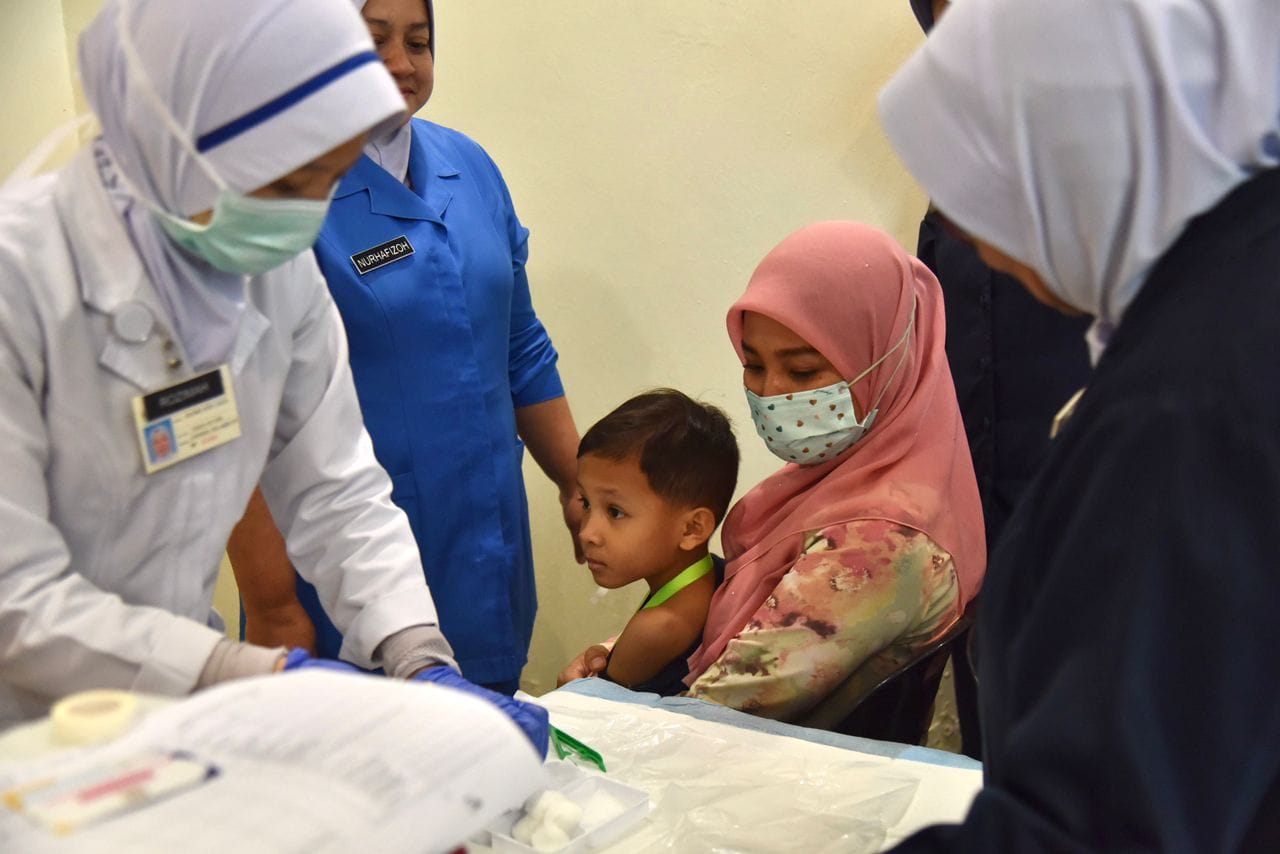
The measles outbreak in Penampang, Sabah last January is an example of sub-optimal vaccine coverage in a population.
This further emphasises the importance of immunisation, which saves millions of lives every year and prevents many children from disability.
The Ministry of Health (MOH) has ensured that every child in Malaysia has access to the National Immunisation Programme (NIP).
The NIP provides protection against 13 infectious diseases – tuberculosis, diphtheria, pertussis, tetanus, poliomyelitis, Haemophilus influenzae type B, hepatitis B, measles, mumps, rubella, pneumococcus, human papillomavirus, and Japanese encephalitis.
Efforts from the MOH and partners in health care and advocacy have ensured a high coverage rate of more than 95 per cent for most vaccines in the NIP.
High vaccine coverage rates are important for herd immunity and the ones included in the NIP shield children from severe infections that can lead to death or life-threatening complications.
Benefits Of Immunisation
Vaccines contain weakened or inactive parts of the specific bacteria or virus (antigen) that triggers our immune system.
They stimulate the immune system to produce long-lived antibodies and develop memory cells.
In this way, the body can rapidly fight the bacteria or viruses when exposed in the future.
- BCG Vaccine: Protects against severe forms of tuberculosis (TB), including TB meningitis (inflammation of the brain lining) and disseminated TB affecting multiple body systems.
- Haemophilus Influenzae Type B (Hib) and Pneumococcal Vaccines: Safeguard against pneumonia, meningitis, and potential brain damage caused by these infections.
- Haemophilus Influenzae Type B and Diphtheria Vaccines: Offer protection against infections that can cause life-threatening airway obstruction.
- Pertussis (Whooping Cough) Vaccine: Provides immunity against respiratory tract infections characterised by intense coughing and potential complications.
- Tetanus Vaccine: Prevents tetanus, a serious nervous system disorder marked by painful muscle rigidity and other life-threatening complications.
- Polio Vaccine: Shields against poliovirus infection, which can lead to paralysis.
- Hepatitis B vaccine: Reduces the risk of liver scarring and liver cancer associated with hepatitis B infection.
- HPV Vaccine: Guards against cervical cancer caused by human papillomavirus (HPV) and related diseases.
- MMR Vaccine: Defends against measles and mumps and also protect mothers from contracting rubella (German measles) during pregnancy, averting potential congenital abnormalities and serious implications in the health of the developing foetus.
Vaccine Hesitancy
Despite the importance of immunisation, there are parents who refuse to immunise or delay the immunisation for their children, putting them at risk of getting vaccine-preventable infections.
The causes for vaccine hesitancy are multiple and complex, and may include misinformation or misconception, lack of trust, safety concerns, fear of side effects, and personal experiences.
Many parents are unaware of the dangers of these infections, and some may believe it is unnecessary to immunise their children, as the risk of contracting the disease is low.
Some are concerned about vaccine safety, while others are concerned that their children’s immune system may be overwhelmed or weakened by the multiple vaccines.
There are also parents who are against specific vaccines due to concerns from cultural or religious perspectives.
Addressing vaccine hesitancy requires a multi-faceted approach that involves providing accurate and accessible information, building trust between healthcare providers and parents, addressing concerns and misconceptions, and promoting open dialogue and education about the importance of vaccination for individual and community health.
Should there be doubts about immunising one’s child, parents are encouraged to look up reliable sources on immunisation such as Immunise4Life (IFL), which is a collaborative initiative by the MOH, the Malaysian Paediatric Association, and the Malaysian Society of Infectious Diseases and Chemotherapy.
Assoc Prof Dr Neoh Siew Hong, Assoc Prof Dr Chee Seok Chiong and Dr Lim Yin Sear are academics specialising in paediatrics at the School of Medicine, Faculty of Health and Medical Sciences, Taylor’s University.
- This is the personal opinion of the writer or publication and does not necessarily represent the views of Ova.