

Leukaemia is a cancer of the blood and bone marrow and remains among the more common cancers in Malaysia, ranking within the top ten nationally.
The two main categories of leukaemia are acute and chronic. Acute leukaemia’s, such as Acute Lymphoblastic Leukaemia (ALL) and Acute Myeloid Leukaemia (AML), develop rapidly and require early diagnosis and treatment. Whereas chronic leukaemia’s, including Chronic Myeloid Leukaemia (CML) and Chronic Lymphocytic Leukaemia (CLL), progress more slowly and may be monitored before treatment is initiated.
Why Early Detection Can Be Challenging
Unlike many solid tumours, leukaemia does not form a visible mass and has no routine population screening programme.
Diagnosis depends largely on recognising early clinical features and performing a simple blood test.
Unfortunately, these early symptoms are often subtle and easily mistaken for common viral illnesses or everyday fatigue.
As a result, they are frequently managed through home remedies or self-medication, delaying medical evaluation.
This challenge is particularly evident in rural and remote areas, where access to healthcare information and diagnostic facilities may be limited.
Studies from several Southeast Asian countries suggest that delayed diagnosis of leukaemia is associated with higher mortality rates.
In Malaysia, limited public awareness of blood cancers—compared with more widely discussed cancers such as breast, lung, or colorectal cancer—further contributes to late presentation.
It is therefore essential for the general population to recognise the signs and symptoms of leukaemia.
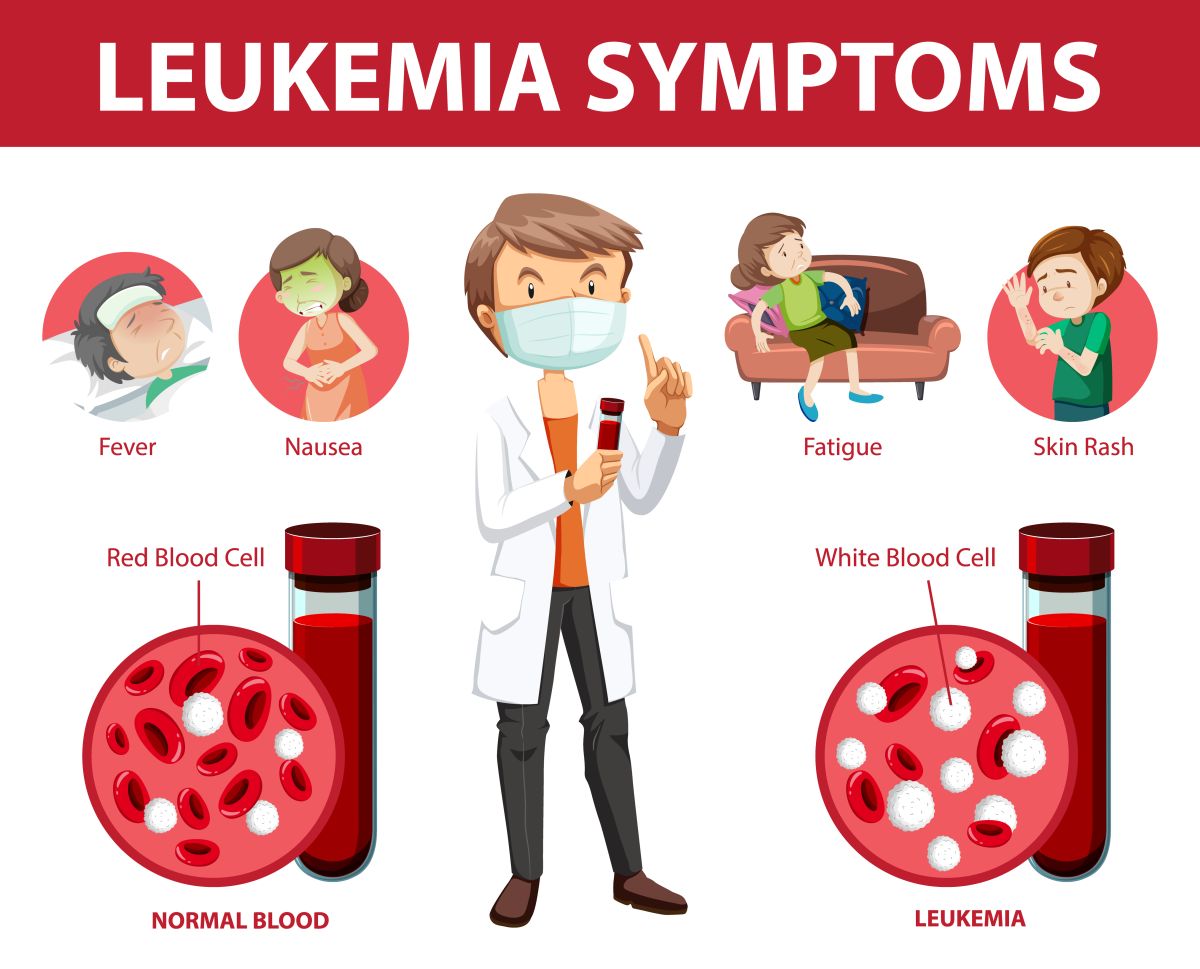
Common early features may include persistent fatigue and weakness, recurrent or prolonged fever, repeated infections, easy bruising and bleeding, unexplained weight loss, swollen lymph nodes, an enlarged spleen, bone or joint pain, and unusually pale skin. In some individuals, the disease may remain silent in its early stages.
Greater awareness and timely blood testing, including a simple full blood count, can provide important early clues and enable earlier referral and treatment.
Treatment Is Evolving
A common misconception is that all blood cancers are uniformly fatal. In reality, several types of leukaemia, particularly certain subtypes and in children, are now considered potentially curable.
Early diagnosis remains one of the most important determinants of treatment success and long-term survival.
Advances in diagnostic and treatment modalities have significantly improved outcomes in many patients.
Modern leukaemia care in Malaysia increasingly includes advanced diagnostic techniques such as flow cytometry, cytogenetic analysis, polymerase chain reaction testing, next-generation sequencing panels, and advance imaging.
Treatment has also evolved to incorporate targeted therapies and improved supportive care, including infection prevention and access to transfusion services.
Stem cell transplant programmes have become more sophistication over time, and in selected centres, patients are beginning to benefit from emerging therapies such as Chimeric Antigen Receptor (CAR) T-cell therapy.
Early Action Saves Lives
Public awareness campaigns play a vital role in ensuring that early symptoms are recognised and acted upon.
Internationally, September is recognised as Blood Cancer Awareness month, with educational initiatives delivered through television, radio, social media, community programmes, and schools.
In Malaysia, public health care facilities, including Klinik Kesihatan and government hospitals, routinely conduct educational sessions to improve recognition of early warning signs.
Nurses, medical assistants, and community health volunteers actively distribute informational materials and advise families on when a simple blood test may be necessary.
School-based health initiatives and annual health carnivals further expand outreach, empowering parents, teachers, and students with basic knowledge about blood cancers.
Private sector organisations and non-governmental organisations also play an important complementary role. Groups such as the National Cancer Society Malaysia and Majlis Kanser Nasional (MAKNA) conduct outreach in schools, workplaces, and rural communities, promote awareness through social media campaigns, and provide free or subsidised health screenings.
As leukaemia continues to affect Malaysians across all age groups, early awareness remains one of the most powerful tools in improving outcomes.
Parents, teachers, employers, and community leaders all have a role to play by encouraging timely check-ups and not dismissing symptoms as routine or harmless.
A simple visit to the clinic and a basic blood test can save lives. By staying informed, sharing knowledge, and seeking care early, Malaysians can help reduce late stage diagnoses and improve outcomes for individuals and families affected by leukaemia.
Dr Farzana Rizwan and Dr Imam Shaik are senior lecturers at the School of Medicine, Faculty of Health and Medical Sciences, Taylor’s University.
- This is the personal opinion of the writer or publication and does not necessarily represent the views of Ova.