


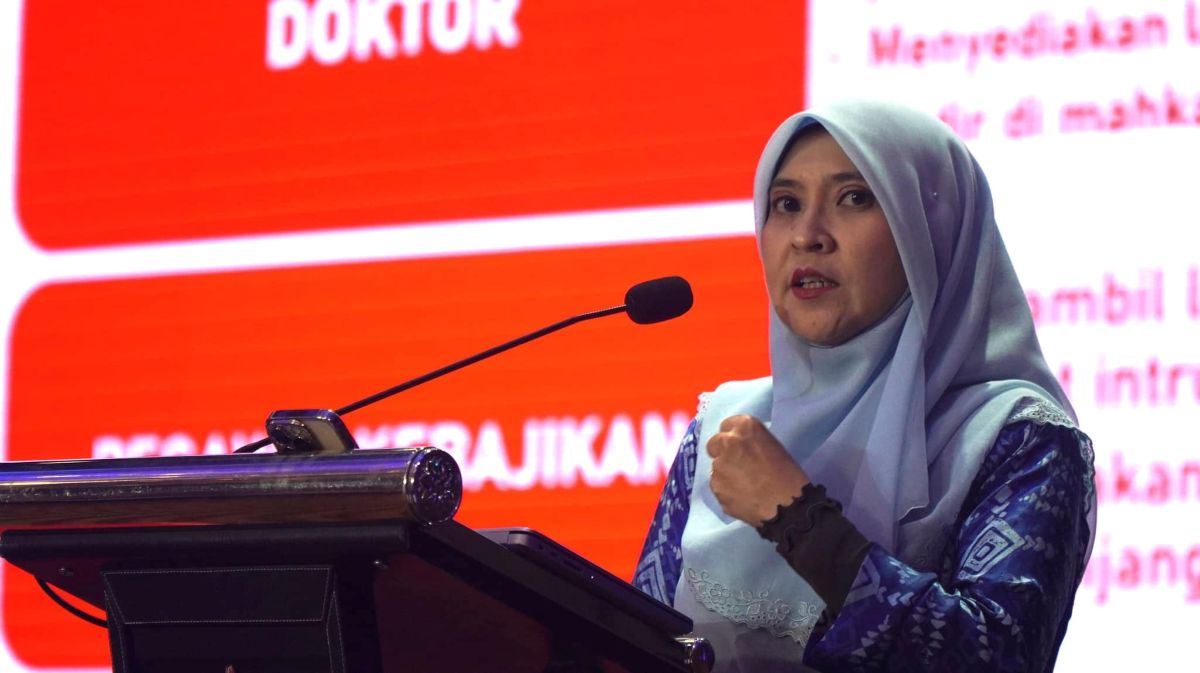
KUALA LUMPUR, Sept 24 – The Office of the Children’s Commissioner (OCC) of the Human Rights Commission of Malaysia (Suhakam) has issued a statement to provide clarification regarding the legal principles of statutory rape under Section 375(g) of the Penal Code, particularly on the issue of consent and the protection of children.
The statement comes on the heels of the uproar following Kelantan police chief Yusoff Mamat’s statement that underage girls who have “consensual” sex should also face legal consequences when their adult male partners are charged with statutory rape.
“This law is based on the principle that girls under the age of 16 do not have the legal capacity to give consent to any form of sexual activity,” said Farah Nini Dusuki, chief children’s commissioner of Suhakam.
“This means that even if a situation appears to be ‘mutual’, the law still regards the girl as a victim.
“The rationale is that girls at this age are not yet mature physically, mentally, or emotionally, and are easily exposed to manipulation, persuasion, or exploitation by others.
“Therefore, the law ensures that girls who are victims are protected from double trauma and are not blamed or punished.”
She added that punishment in these cases applies only to the male perpetrator, whether he is an adult or a child under the age of 18.
However, while male child perpetrators can be charged under the law, they are subject to the special principles of juvenile justice.
“According to Section 91 of the Child Act 2001 [Act 611], the court has the authority to issue orders for children, including placement in approved institutions (Sekolah Tunas Bakti) or Henry Gurney Schools,” Farah said.
“This approach strikes a balance between accountability and rehabilitation, providing young offenders with a second chance. They are not punished like adult criminals, but are still held responsible and undergo rehabilitation.”
She emphasised that statutory rape laws are not intended to punish girl victims, but to protect them from any form of exploitation and discrimination.
“These laws reflect Malaysia’s commitment to the best interests of the child as outlined in the Convention on the Rights of the Child (CRC) and the Child Act 2001.”
She called on all parties, particularly enforcement agencies, educators, and society at large, to understand and uphold this principle.
“Protecting children is a collective responsibility, and every child deserves full protection from exploitation and the opportunity to grow up safely and healthily.”
Yusoff, who reportedly told a press conference at the Kelantan police headquarters that 90 per cent of statutory rape cases are consensual, was also reported to have said: “When a report is made, we still have to open an investigation paper and charge the man according to the Penal Code or the Child Act, even if there is an admission that it was done consensually.”
His remarks were met with condemnation from DAP national adviser Lim Guan Eng, Lawyers for Liberty co-founder Latheefa Koya, and the Malaysian Paediatric Association.