
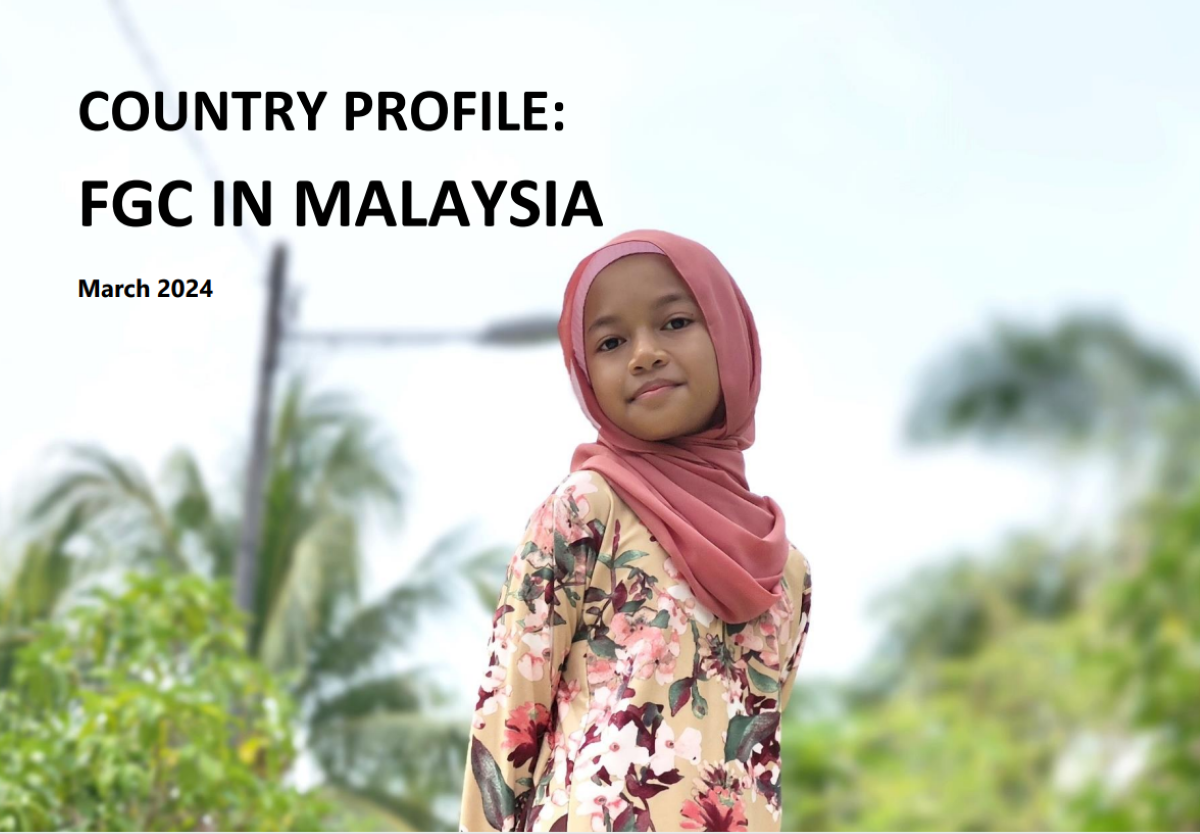
KUALA LUMPUR, August 12 – When it comes to Female Genital Cutting (FGC) in Malaysia, the most recent research shows that parents from younger age groups prefer that the practice be performed by health care professionals, particularly doctors, according to a Country Profile on the practice of FGC in Malaysia published this year.
Published by the Orchid Project, an international NGO working to end Female Genital Mutilation/Cutting (FGM/C), and the Asia Network to end FGM/C, the report cites a 2019 study which found that 62.8 per cent of Malaysian women aged 26 to 40 prefer that doctors perform FGM on their daughters.

Similarly, a majority of women in the age 26 and below group (60.8 per cent) preferred doctors, while 51.4 per cent of those aged 41 to 60 also expressed a preference for doctors.
In comparison, only 5.9 per cent of women 60 years and older would choose a doctor to perform FGC on their child. The majority of women in this age group (64.7 per cent) said they would opt for a Mak Bidan instead.
The findings reflect the trend towards medicalisation of FGC in Malaysia, which has been ongoing since the 1980s, in line with continuing debates about the harm caused by the practice.
Even the term used to describe FGC in the country is considered sanitised, compared to the more widely used globally Female Genital Mutilation (FGM), which is defined by the World Health Organization (WHO) as the “partial or total removal of the external female genitalia or other injury to the female genital organs for non-medical reasons”.
WHO classifies FGM into four major types:
- Type 1: This is the partial or total removal of the clitoral glans (the external and visible part of the clitoris, which is a sensitive part of the female genitals), and/or the prepuce/clitoral hood (the fold of skin surrounding the clitoral glans).
- Type 2: This is the partial or total removal of the clitoral glans and the labia minora (the inner folds of the vulva), with or without removal of the labia majora (the outer folds of skin of the vulva).
- Type 3: Also known as infibulation, this is the narrowing of the vaginal opening through the creation of a covering seal. The seal is formed by cutting and repositioning the labia minora, or labia majora, sometimes through stitching, with or without removal of the clitoral prepuce/clitoral hood and glans.
- Type 4: This includes all other harmful procedures to the female genitalia for non-medical purposes, e.g., pricking, piercing, incising, scraping, and cauterising the genital area.
Any Form Of Cutting Is Internationally Recognised As A Violation Of Human Rights
According to the report, Malaysia and other Southeast Asian countries consider FGM to be a Western-imposed terminology that does not adequately reflect “female circumcision as practiced in the region”.
However, in 2019, the Committee on the Elimination of Discrimination Against Women (Cedaw) and the Committee on the Rights of the Child issued a joint general recommendation on harmful practices, linking these various terms to one single practice.
Despite linguistic differences and sentiments, the practice of female circumcision in Southeast Asia still falls under the WHO’s classifications of Type 1 FGM and Type 4 FGM, and the practice of any form of cutting is recognised internationally to be a violation of human rights, the rights of the child and women’s rights.
In Malaysia, the term female circumcision is typically used because of its positive and medical connotations, which associates the practice with male circumcision and its accompanying notions of ‘cleanliness’ and ‘necessity’.
The report cites a 2017 study conducted in an antenatal hospital among an overwhelming majority of respondents of child-bearing age, which found that 73 per cent of respondents chose doctors as their preferred practitioners of FGC.
A review of two separate studies carried out in rural settings in the same provinces of Malaysia (Kedah and Penang) 10 years apart, show a preference for health professionals when it comes to FGC among the younger generation, particularly those aged 18 and below in 2009 (50.2 per cent) and women aged 26 and below in 2019 (44.3 per cent).

Women who prefer to see a doctor at the clinic for FGC cite cleanliness and expertise as their reasons for choosing the more modern approach to the practice. Meanwhile, women who opt for Mak Bidans do so to comply with traditional and cultural knowledge.

Poor Vision And Tremors Result In Struggles To Locate The Clitoris
A Mak Bidan’s toolkit for FGC consists of razor blades (often disposable, but not sterilised or changed every time), small pair of scissors, penknives, needles, nail clippers, or blades.
According to the report, they are trusted by the older generations for their understanding of how minute a cut FGC should be, their greater levels of sensitivity to it as a feminine issue compared to doctors, their lower fees, and their willingness to visit people’s home to perform the procedure.
However, the report notes that while Mak Bidans tend to demonstrate extreme caution, they sometimes lack the knowledge to prevent infection, or are elderly and suffer from poor vision and tremors, resulting in a struggle to locate the clitoris.
Doctors As A ‘Harm Reduction’ Measure
The younger generations have become more receptive to doctors as a ‘harm reduction’ measure to prevent infection under aseptic conditions, and because of Mak Bidans’ old age tremors and bad eyesight. Furthermore, rapid urbanisation has led to the availability of FGC in more accessible, formal health care settings.
Nowadays, most FGC cases in Malaysia are performed by health care professionals, contrary to the Medical Act 1971 and the Code of Professional Conduct, which impose a good standard of medical care and the need for consent to medical treatment.
According to the report, a large piece of research on FGC medicalisation found that 85.4 per cent of doctors think FGC should continue. Independently of views on FGC itself, support for medicalised FGC is universal in Malaysia, as a harm-reduction measure for the prevention of infections.
The ‘Just A Little’ Justification
In Malaysia, the cut made during FGC has traditionally been relatively minor, commonly involving pricking and occasionally the removal of a flesh the size of a grain of rice. The justification of “just a little” is often made to condone the practice.
However, the report notes that recent studies on the anatomy of the clitoris and the clitoral hood provides more information about the physiological harm of FGC.
The size of a child’s genitals and girls’ development processes mean that ‘a little incision’ and ‘a right process’ cannot be guaranteed to cause no harm, may inflict on the baby a high level of pain and may even result in her losing her clitoris.
A number of doctors practise more invasive forms of FGC by cutting parts of the clitoris, which falls under Type 1 of the WHO classification of FGM/C.
According to a leaflet recently published by NGOs and a group of Malaysian doctors, a significant number of doctors in Malaysia who practise FGC have implied that they may have insufficient knowledge of clitoral anatomy and physiology.
Thirty-six per cent of the doctors who admitted to performing circumcision, as cited in a survey in the leaflet, used surgical scissors to cut a small piece of the external clitoris, which means their procedure falls under Type 1 FGM.
The Country Profile report notes the paradoxical results of medicalisation, which sometimes results in deeper cuts or cuts on the clitoris rather than the prepuce ((the fold of skin surrounding the clitoris).
Malaysian Medical Council Silent On FGM/C
According to the report though, the Malaysian Medical Council (MMC) is thought to regard FGC as a predominantly Muslim issue.
As such, it has remained silent on the issue.
There seems to be general agreement that FGC is not to be performed by members of the medical profession, but practising doctors consider the MMC’s silence to be ‘tacit approval’.
The majority of medical practitioners lack awareness of civil or religious legalities or of the global concern and ethics surrounding FGC.
However, doctors would be disinclined to continuing the practice if there were clear instructions from the MMC and if FGC were made illegal.
The report calls for a break in the silence surrounding FGC, urging that the issue be brought to the forefront in socio-political spaces, to enable informed debates about harm, consent/parental authority and bodily integrity within all affected ethnic groups and society as a whole.
It also asserts that the Ministry of Health, Department of Islamic Development (JAKIM) and medical professionals must deepen the understanding of physical, emotional, psychological and sexual harms caused by FGM/C Types 1 and 4, and issue statements accordingly.