
KUALA LUMPUR, July 14 – The combined wealth of the world’s 2,781 billionaires hit US$14.2 trillion (approximately RM60 trillion) in 2024. They represent only 0.00003 per cent of the world’s population. At the same time, nearly half of humanity, representing 3.6 billion people, live below the World Bank income poverty line of US6.85 (approximately RM29) a day.
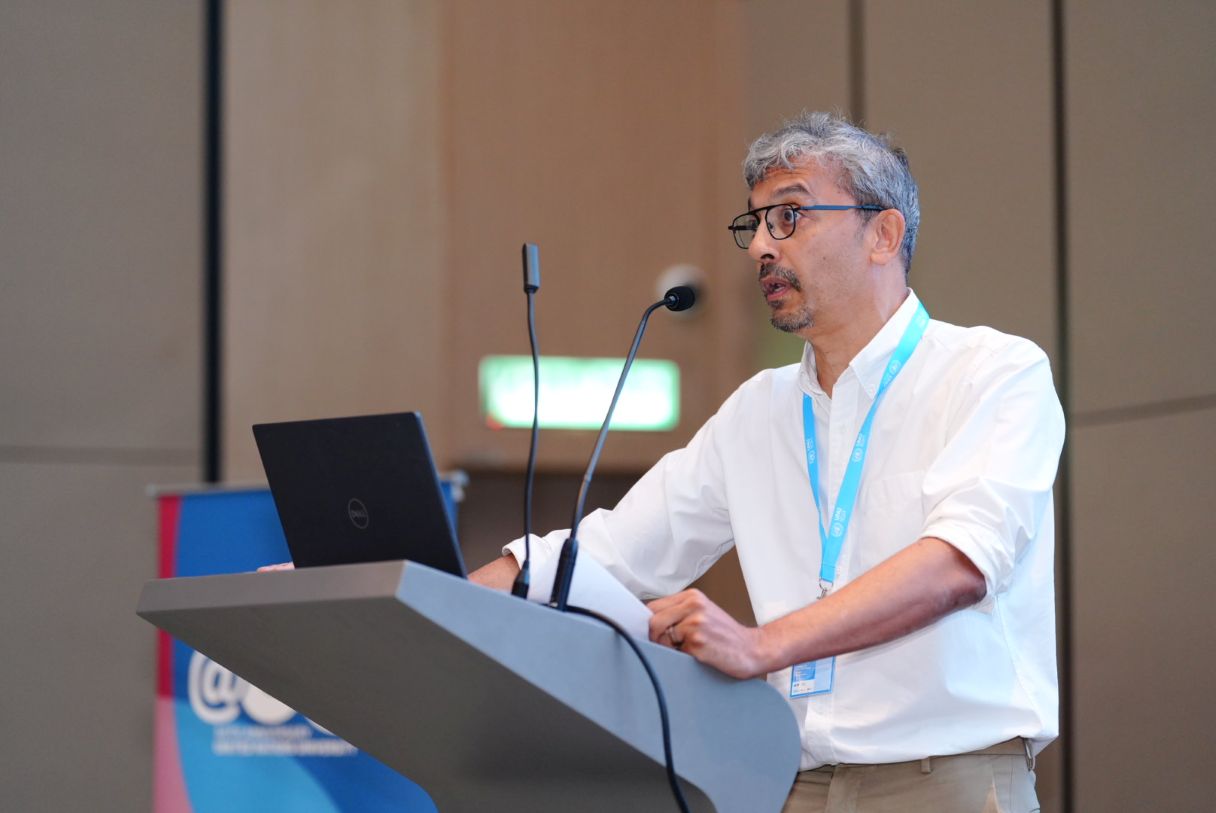
These stark figures provided by David McCoy, research lead at the United Nations University International Institute for Global Health (UNU-IIGH) during a symposium last April 22, not only reflect the inequality prevalent in the world today, but also the inequity that inevitably arises in a blatantly uneven playing field where the distribution of resources and opportunities are concentrated in the hands of the wealthy few.
“Inequalities are also growing within many countries with evidence that greater inequality produces poorer health for the poor and the middle classes alike,” McCoy said “There is a sound epidemiological basis for exploring the association between concentrated power and wealth and its influence on health governance.
“Whether it’s about the unethical and deceitful marketing of commercial milk formula, or whether it’s about challenging the abuse of intellectual property rights to keep essential medicines out of the reach of millions of people with HIV, or whether it’s about fighting for the truth around the causal relationship between fossil fuels and global warming, there is a long history of public health having to engage with the politics of the world.”
He gave as examples international health documents and conventions such as the Alma Ata Declaration, the World Health Organization’s (WHO) constitution and UNICEF’s conceptual framework for the causes of child mortality, that address the social and political determinants of health inequalities.
“The history of global health has always been a tension between keeping it boxed in within the biomedical paradigm and ensuring that health is seen as much more than that; health is seen as a social, economic and cultural outcome.”
McCoy said with huge public funding cuts not just to the WHO, but a whole range of global health organisations and global health programmes, it is likely that the global health system is going to become more dependent and more reliant on private funding over the coming years.
Governance Fundamental To Holding Private Actors Accountable
While the importance of engagement with the private sector is not being discounted, he said, it should be subjected to more scrutiny given that issues of harmful private practices, unregulated and excessive private power, abusive private power, and unethical conflicts of interest might arise.
“It’s about how all of these things connect with health inequalities and poor health governance,” said McCoy, who added that governance was fundamental to ensuring private actors are held accountable.
“And by extension, intergovernmental organisations, because governments and intergovernmental organisations have the authority to play the critical role in setting the regulatory and legal frameworks and ensuring that the rules of the game in our political and economic systems are fair, effective, efficient and ecological.”
There is an inherent link in the relationship between accountability and governance, and the distribution of power. While there are many accountability systems that reinforce hierarchy or protect excessive and concentrated power, McCoy said, “the kind of accountability that produces good governance is accountability that runs against the gradient of power.”
The current system of global health governance is influenced by a wider political and economic context that has been shaped by historical factors, globalisation, national politics (especially of the bigger and wealthy states), and international politics, he continued.
However, he added that those working in global health should be actively working to shape the wider global political and economic context in which they operate, and international relations and national politics in order to promote equitable and sustainable global health.
Not All In The Same Boat During The Pandemic

In her presentation during the symposium, Nicoletta Dentico, director of Global Health Justice at the Society for International Development, said the failings of global health governance were laid bare during the pandemic when the goal of vaccine equity failed to be realised.
“I think the time has come to really cure global health. To cure global health from its own idiosyncrasies or pathologies,” she said.
“There are many of them. Many of them that have created a political culture around health that is completely betraying the notion of health, as it was created 80 years ago. It is betraying the profound sense of what health, public health, the right to health, entails.”
Dentico said while the Covid-19 pandemic five years ago was a disaster for millions of people, it “came as a fantastic pedagogist to actually show us how things were not working.”
“I think the world thought that Covid might be an epiphanic moment for recovering the sense of togetherness, of being all in this together. As someone said, we were all in the same boat.”
However, that really wasn’t the case, she continued. “I’ve never believed that we were in the same boat. Some had yachts, some had sailing boats, some had little pieces of wood to kind of cling to, and some were simply swimming, if they could swim.”
But while everyone wasn’t in the same boat, there was “an epiphanic moment” during the pandemic when the world understood the concept of fragility and togetherness, Dentico said. “And also we understood how important health and public health was.”
However, the Covid pandemic also paved the way, through the failure of governance over time, for private entities to take over completely, she continued.
On the 24th of April in 2020, the WHO convened a meeting to launch the Access to Covid-19 Tools (ACT) Accelerator.
“If I recall that moment, yes, the WHO was the convening space, but it really did not have much power in the exercise,” Dentico said. “The power was in the hands of only one person that really was ready to face Covid, and that was Bill Gates. He was the kingmaker of the whole thing.”
The (ACT) Accelerator, was a global collaboration to accelerate development, production, and equitable access to Covid-19 tests, treatments, and vaccines, which involved governments, scientists, businesses, civil society, and philanthropists and global health organisations.
The organisations involved included the Coalition for Epidemic Preparedness Innovations (CEPI), and Gavi, the global vaccine alliance, which are the brainchild of the Bill and Melinda Gates Foundation, said Dentico, and the Global Fund, the Wellcome Trust, Unitaid and the World Bank.
Through a global procurement mechanism called the Covax facility, it had the initial target of supplying vaccines to meet the needs of at least 20 per cent of the population in low and middle income nations.
However, Covax fell far short of its target because of poor buy-in from higher income countries (HICs) and upper middle income countries (UMICs) that instead of purchasing vaccines though the facility, struck bilateral deals with pharmaceutical companies to obtain vaccines for their own population.
By prioritising national interests, these countries undercut the supply of vaccines to Covax and reduced its purchasing power, jeopardising multilateral vaccine efforts and undermining the aim to make vaccines available to all countries at the same time. `
Underestimating Governance Implications Of The Super PPP
Dentico said the Covid pandemic was a “historic moment of obfuscation because when we were confronted with the global health crisis — it wasn’t the first, but it was certainly the biggest dimensionally — we were confronted with the fact that the international community entrusted to entities of private jurisdiction, contracted or outsourced to private entities –which do not make treaties, do not make transparent public arrangements, they make contracts — the management and the response to this international crisis.
“We all kind of thought that was the panacea, that was the thing to do, the only thing we complained about was the fact that civil society should be part of this mechanism.”
However, with exceptions, many people overlooked the governance implications of “a kind of super PPP — a very complex animal that was becoming increasingly obscure to all of us, even to governments,” she continued.
Public-private partnerships (PPPs) are agreements that divide costs, risks and decision-making power between public and private actors to provide a public service.
They have recently become a dominant institutional form in the financing and implementation of large-scale infrastructure projects, including the construction and running of public hospitals, according to a briefing paper by UNU-IIGH.
Additionally, with the creation of Gavi, the Global Fund and CEPI, PPPs have become a dominant mode of multilateral health governance in the past decades.
“PPPs are being institutionalised into the fabric of a new legal instrument,” said Dentico.
“This is extremely concerning, I think. And it is extremely concerning because the political culture around this is that we will be able to face new pandemics through a new round of projectification — of projects rather than policies around health.
“This is extremely concerning because health needs are really getting more and more distant.”
This is not just happening at the international level, said Dentico, who added that national governments have delegated very important roles to private sector organisations.
“And often, even at the national level, they have been obliged to accept the level of regulations — if you want to call it that — that these private organisations have imposed.
Governments And Private Actors Morphing Into Each Other
“We have always talked about transparency and accountability, but I want to raise a rather more philosophical issue.
“It’s a question of legitimacy. How are we going to accept the fact that the transferring of public functions to private actors is not just a question of transparency and accountability.
“It’s a question of actually transforming the practice of governance, of governing, beyond the commodification of public goods and particular public purposes.
“I think the problem of transferring leads us to a new institutional arrangement, which is this privatised state.”
Governments are morphing into a nexus of contacts with private actors while private actors are in turn, morphing into governments, said Dentico.
“By undermining the separation between public offices and private roles, privatisation is actually turning the wheel back to a renewed era of patrimonialism and a re-feudalisation of the state, which is exactly what we are seeing now with Trump.”
After Covid, it is imperative to recover the idea of prevention and health promotion, Dentico continued.
“And for a moment, please, let’s stop talking only about biomedical fixes, because that’s very much a private sector agenda. We need to be very self-critical of this. Not that medicines are not important, of course, but we need to go back to a new political culture of health.
“We need to decentralise and de-imperialise the solutions also, because in the name of “globalisation), we tend to impose Western models, Western ideas, Western science. And we lose the biodiversity of science in this.”
Financial Injustice Compromises Public Health Financing
Dentico added that donor financing is also something to be mindful of. “Donor financing confers legitimacy on remote control, I think. And we need to go back to a real collaboration among countries.
“There is this pretence of the North or donor countries that they know reality on the ground. But this is actually, we know very well, it’s a fake piece of reality.
“And finally, we cannot discuss financing public health today, delinking this arena from financial injustice that is around the world,” she continued, adding this includes debt, illicit financial flows, fiscal havens and international taxation regimes.
“I know that WHO today is in the hands of the Boston Consulting Group (BSG) in order to save itself for the future.”
WHO spent US$2,849,745 (approximately RM12 million) on the BSG between April and May this year for the first phase of the organisation’s restructuring, which was motivated by the withdrawal of the US, WHO’s largest donor, in January.
This led to a budget deficit of US$1.7 billion (approximately RM7.2 billion) in WHO’s planned US$4.2 billion (approximately RM17.8 billion) base budget for 2026 to 2027, which doesn’t include emergencies.
WHO also has a contract pending with the BSG worth US$4.295 million (approximately RM18.15 million) for the second phase of the organisation’s restructuring.
However, according to Dentico, “we need to move away from consulting firms, and we need to go back to fiscal policies at the national level, because that’s how we can restart a democratic exercise.”