
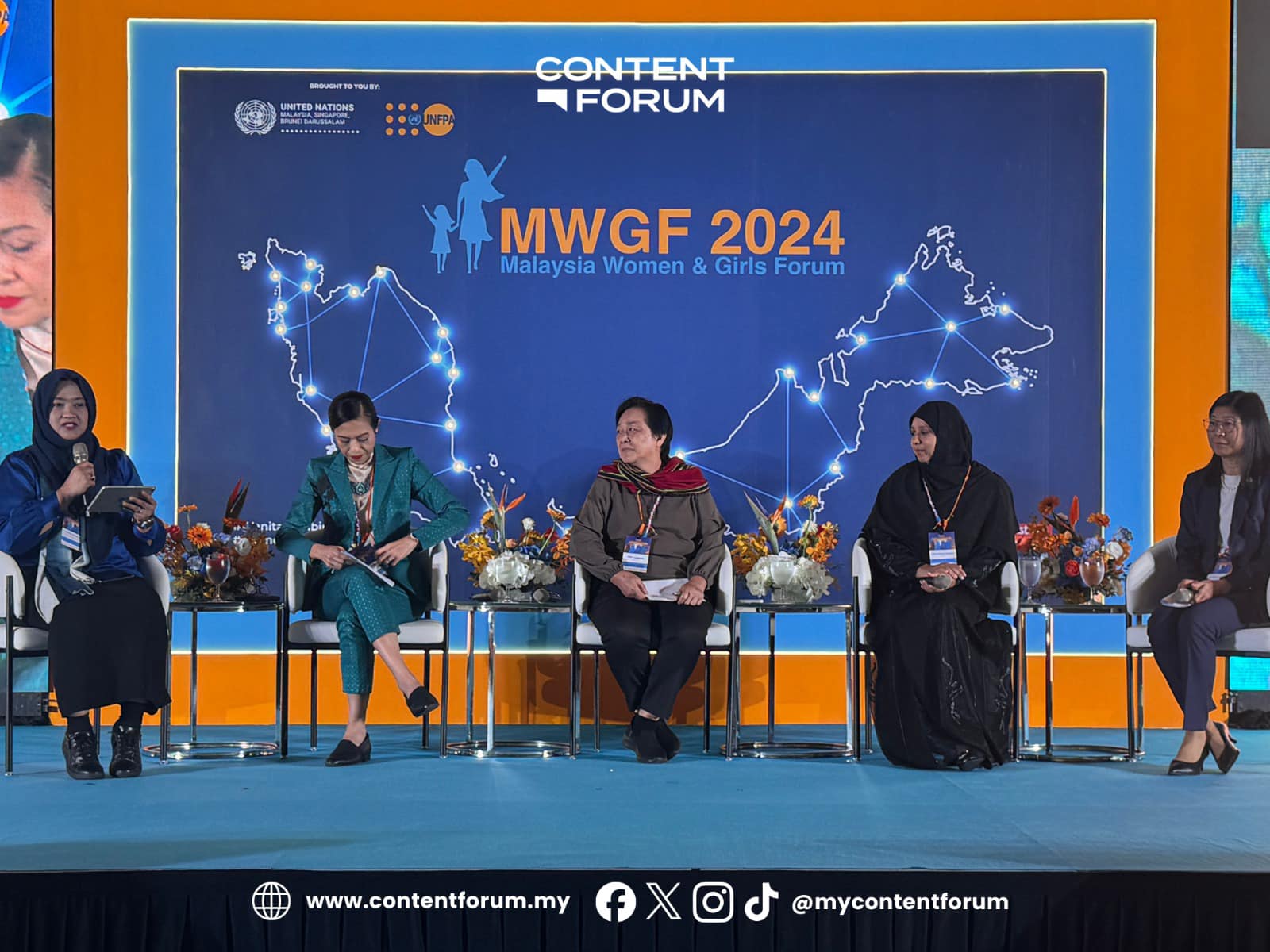
KUALA LUMPUR, Jan 17 – At the fourth Malaysia Women and Girls Forum (MWGF) held last December 12, 2024, panellists, keynote speakers and moderators discussed the critical role that Malaysia’s women and girls play in advancing Malaysia’s socio-economic development, the factors that contribute to and perpetuate existing gaps in female economic and political participation, and urgent solutions required to definitively bridge these gaps as Malaysia heads towards the 2030 Sustainable Development Goals.
The event, themed Women and Nation Building: The Foundation for Diversity, Equity and Inclusion, was launched by Minister of Women, Family and Community Development (KPWKM) Nancy Shukri, via a recorded keynote address. In her speech, she announced the government’s plans to launch a new National Women Action Plan in early 2025.
Family Is A Shared Responsibility
The first plenary session titled Female Representation in Public Life, featured discussions on the challenges and policies needed to ensure women’s full participation in Malaysia’s political, social and economic sectors.
Panellists include Syerleena Abdul Rashid, Bukit Bendera MP; Anne Lasimbang, executive director of PACOS Trust; Aishath Muneeza, professor and associate dean at INCEIF University Malaysia; and Pauline Ho, Corporate Sustainability and Net Zero leader at PwC Malaysia and steering committee member of 30% Club Malaysia.
Syerleena talked about the importance of shared responsibility between men and women, not just for family or care duties at home, but also in pushing for family-friendly policies.
“Family is a shared responsibility. So when we talk about child care, maternity leave and so on, it should not just be women talking about it, the burden shouldn’t just be on us. We need the men to start talking as well,” she said.
To increase the political participation of women from indigenous and rural communities in Sabah, Anne Lasimbang highlighted the need for engaging with grassroots women, particularly through the provision of training to cultivate more female village heads.
Aishath echoed the need to tailor policies and programmes that target rural women, specifically financial literacy and entrepreneurship programmes.
On the corporate side, Ho stressed how mentoring and implementing gender neutral policies such as equal parental leave and flexible working arrangements are crucial because they enable more women to thrive in their careers.
She said ultimately, the men in corporate leadership must view policies such as these as a “business issue”, as it impacts business viability and sustainability.
“If 50 per cent of your consumers or audience is female, and you don’t have female representation in your decision-making committee or board, how do you know how to reach out to them?”
Climate Crisis Is Not Gender Neutral
The second plenary session, Making the Change: Navigating Towards an Inclusive Future for Malaysia, asked panellists to imagine what an inclusive Malaysia would look like, one that takes into account the diverse needs and lived realities of individuals in disabled, rural, indigenous and minority communities in policymaking.
Panellists included Kusaaliny Mahendran, national executive council member of DAP Socialist Youth (DAPSY) Malaysia, Sean Augustin, editor of Free Malaysia Today, Aroe Ajoeni, co-founder and communications head at Klima Action Malaysia (KAMY), and Aveena Devi, mixed media artist and disability rights activist (spina bifida and hydrocephalus).
During the panel discussion, Kusaaliny praised the DAP Internship Programme that matches interns to leaders within the party, and expressed gratitude for the support she received from more senior female mentors who inspired her to progress in her career.
“Having seniors who have done it for a long time, and who continue to do it is very inspiring, but it also makes it seem like it is not impossible for people like me who have no background, no family connections or wealthy business connections to continue to grow in politics,” she said.
Aroe spoke about the gendered impacts of the climate crisis, highlighting that women were more vulnerable to disasters such as floods.
“The climate crisis is not gender neutral. Whenever a community is hit by disaster, most of the time it is women who contact [NGOs] first, it is women stepping up the most to make sure their communities are safe. And when disasters hit, unfortunately women have to carry the burden of care work even more.”
She also said that representation of indigenous women and communities in policymaking was hampered by persistent issues affecting their basic wellbeing and rights, such as the encroachment and destruction of Orang Asli settlements, land grabs, pollution and disasters stemming from deforestation and climate change.
According to Sean, the media has an important role to play in responsibly framing stories, and being mindful of word choices, especially when it comes to portraying women fairly, rejecting victim blaming narratives and minimising harm to survivors of violence.
Aveena said that exercising empathy, alongside engaging with persons with disabilities to learn about their lived realities in a spirit of openness and curiosity, will help to break stigmas, and ensure their diverse needs are reflected in things as basic as infrastructure and building design.
Make It Law That At Least 50 Per Cent Of MPs Are Female

The final session titled In Conversation with Malaysia’s Female Nation Builders featured a discussion with Teo Nie Ching, deputy minister of communications and senator Zurainah Musa.
During this final session, the two panellists reflected on the challenges they have faced across their extensive experience in politics and in Parliament, and what they believe are the steps that must be taken for Malaysian women to take up equal space in leadership and decision-making.
As a female political leader and working mother Teo Nie Ching said she felt strongly about supporting policies designed to help working mothers. “What I’ve always been interested in campaigning for is: how can we assist working mothers?” she said.
“When we want women to come back into the workforce, what are the policies in place that are available for them? How can we strengthen our child care services? What are our policies for elderly care?”
She also took the opportunity to emphasise the importance of support from husbands in ensuring women are equally able to pursue their careers, dreams and ambitions.
This would require give and take between spouses, involving shared responsibility and taking into account aspects of flexibility, timing and opportunity for both spouses, as she believed women should not by default be expected to sacrifice their personal ambitions to cater solely to familial duties.
This was a sentiment shared by Zurainah, who said that both spouses should be able to work together to equally honour and support each other’s aspirations and careers.
She also demanded fairness in legislation to facilitate shared caregiving responsibility among parents, especially through the implementation of equal or shared parental leaves.
The senator also expressed her strong support for laws that would make 50 per cent female candidates for parties mandatory.
“What we’re asking for is to make it law that at least 50 per cent of Members of Parliament are female. Whether we win [elections] or not is secondary.
“You will be able to serve [the nation] in many ways, but what is important is that 50 per cent must be made law, because then, the leaders of all parties will ensure that the candidates will be 50 per cent women. If not, it will never happen. We need to take that stand,” Zurainah said.