
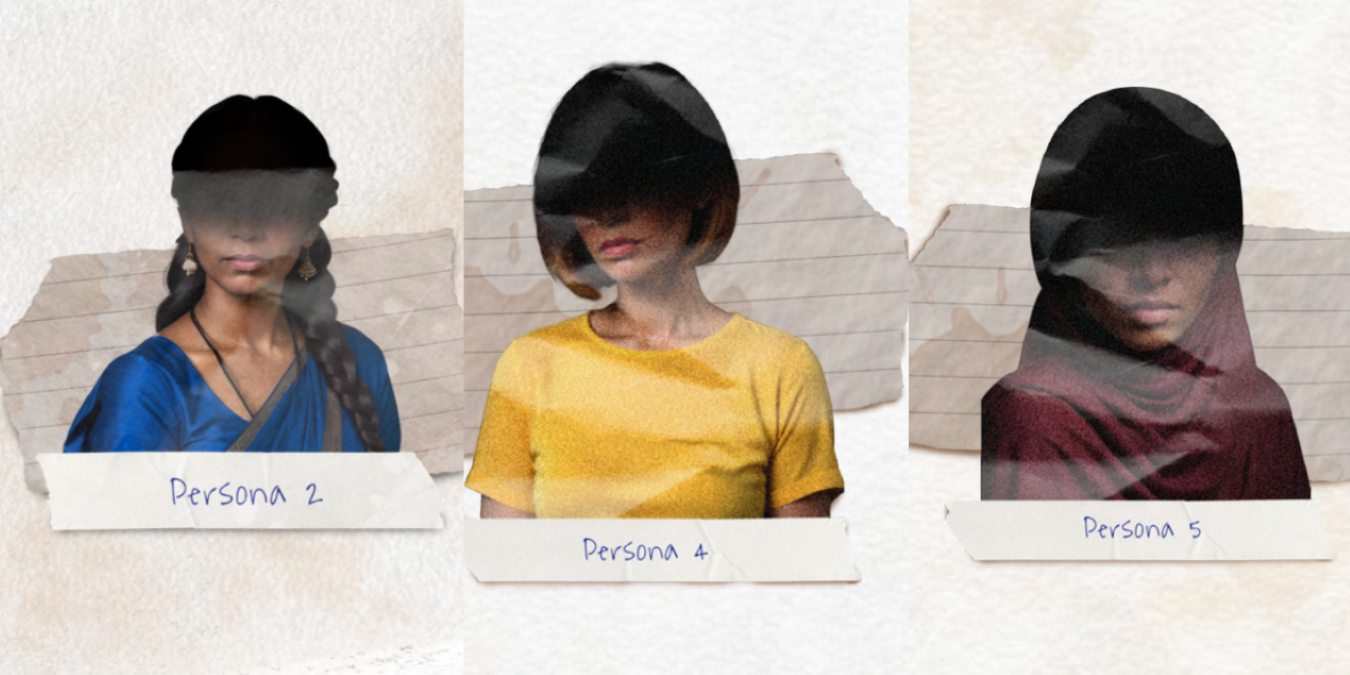
KUALA LUMPUR, March 19 – A Malaysian woman who bore the brunt of her husband’s frustrations during the Covid-19 pandemic, a transgender woman who was raped in an alley after being ridiculed for her appearance, and a refugee woman whose hope for a better life is shattered when her husband’s abusive behaviour comes to the fore — these are the personas featured in the second and final part of a series highlighting the accounts of gender based violence (GBV) survivors in Malaysia who shared their experience and insights on navigating the country’s justice and care system.
The first part of the series can be read here.
Their stories are featured in the report ‘Portraits: Journey of Gender Based Violence Survivors across Malaysia’s One-Stop Crisis Centre’ by the United Nations Population Fund (UNFPA) Malaysia and the United Nations International Institute for Global Health (UNU-IIGH).
The following are the abridged accounts of GBV survivors from the report through the perspectives of personas that were developed from a composite of resources including in-depth interviews and informal discussions with survivors and civil society organisations (CSO) representatives, GBV policy analysis, peer-reviewed literature, and information obtained from presentations and stakeholder workshops:
SHREELATHA VENOGOPAL: Seeking Help After Physical Abuse By Husband

Shreelatha Venogopal’s persona narrative draws on:
- Analysis of 11 interviews with GBV survivors.
- A comprehensive analysis of the GBV policy landscape in Malaysia prepared by UNU-IIGH.
- Experiences of other GBV survivors with similar settings drawn from the relevant, peer-reviewed literature focusing on Malaysia and Southeast Asia.
When Shreelatha Venogopal’s husband lost his job as a construction supervisor during Covid-19, he became obsessed with their finances. The situation became more fraught when he got long Covid and could not work following the lockdown’s termination.
Shree felt herself growing weary with the responsibility of the household and being the sole breadwinner. His remarks and complaints over her inability to bring in more money and the less-than-immaculate state of their home grew more acerbic and combative as time passed. Shree ended up dreading returning home at the end of a long workday.
She kept telling herself that things would return to normal after he returned to work, but one evening their fight turned physical. Shree was punched in the face and kicked in the ribs. While she was down and bleeding in the head, her husband kept shouting at her and pulling her hair, trying to have her stand up.
Sit Tight And Wait For Police To Come In Eight Hours
When she could stand, Shree locked herself in their bedroom and called the women’s helpline. The woman on the phone told her to stay locked in her room and wait until the police came the following morning.
Shree could not believe what she was hearing. She was hurt, her husband was still outside the bedroom door threatening her, and she was told to sit tight and wait for another eight hours?
She hung up the phone and called her younger brother, who lived half an hour away. He showed up 25 minutes later with two friends. After they assured her that her husband was nowhere to be seen, they drove her to the nearest hospital.
At the hospital where the OSCC was located, she was asked to file a report before being treated to attest that her injuries resulted from domestic violence.
This did not take very long, but the police officer on duty pointed out that this was not the official police report. To submit the report, they would need to go to a police station.
Cannot File A Report Outside Jurisdiction
The police officer was kind and provided them the address of the nearest police station, but they were informed when they arrived at the station that they could not lodge a report because it was outside the jurisdiction of her home. They had to drive to the police station nearest to her home address, where she finally submitted her report.
Shree was then taken to the emergency room, where she discovered she had two bruised ribs. After treating her injuries, the doctor advised her on what she needed to look out for, prescribed some painkillers, and booked a follow-up appointment to ensure that everything was healing correctly.
The doctor also gave her referrals to the social welfare and psychiatric department, and told her to preferably speak to the social worker before going to the police, as the social worker could advise her on what to include in the official report.
What’s Going To Happen With The Children?
While the doctor spoke to her, Shree kept thinking how fortunate it was that her kids, who were with their grandparents, were not at the house that night.
However, she realised that keeping the children away from their father for longer would be complicated.
He would not stand for this, but returning the children to their father was not an option either. He would use them as a bargaining chip for her to return to him, and she would constantly worry for their safety.
It was past midnight by the time they were done at the hospital. Shree would spend the night at her brother’s place and they would visit the police the next day.
Her parents, who had her kids, were informed about what happened. Shree had switched off her phone as her husband kept calling and texting her about how sorry he was and asking about her whereabouts.
KRISTINE KAMIL: Surviving Sexual Assault In An Alley

Kristine Kamil’s persona narrative draws from:
- An in-depth interview with a CSO representative who had helped a transgender woman to obtain treatment at an OSCC.
- Data gathering through informal and confidential discussions with representatives with other transgender survivors and CSO representatives. This decision was driven by the expressed concerns from participants about the risks involved in sharing sensitive information through formal, recorded interviews.
- Insights gathered from transgender participants and survivors in the stakeholder workshop involved in supporting GBV survivors from the Malaysian LGBTIQ+ community.
Kristine Kamil moved to a different city and severed ties with most of her family because they did not approve of or could not understand her desire to live authentically as a woman. One rainy afternoon, while returning from the market, she was stopped by three strangers who started making fun of her clothes and how she looked.
Her instinct told her she was in danger but before she could escape to safety, the three men dragged her to a nearby alley, where they sexually assaulted her.
She managed to drag herself to her flat, worrying constantly that her attackers would follow her there too. Despite being in pain, she knew she had to reach out for medical help as she feared that her attackers may have infected her with HIV.
She called her friend Geetha, who arrived at the flat shortly after that. Together, they went to the crisis centre at the nearest hospital. The stern receptionist regarded them with guarded curiosity.
While taking down their details, the receptionist refused to use Kristine’s preferred female name and filled in the form using her official male name. She explained that using Kristine’s preferred name would complicate things when communicating with other services.
In the crisis centre’s crowded waiting room Kristine and Geetha felt that they were being scrutinised by staff and visitors for their appearance, dress, make-up, and build. The glances and the ensuing whispers made them uneasy.
Kristine, traumatised and in distress, whispered to Geetha, “I don’t know if I can do this.” Geetha whispered back, “we’ll get through this together, Kristine, I promise.”
“Is This A Male Or Female Patient? Who Should Examine Her?”
Geetha told the doctor who came to see Kristine that she needed to accompany her to the examination room, but the doctor insisted that it was against protocol and that she had to wait outside.
So, Kristine waited nervously on her own in the small waiting room, surrounded by posters that featured traditional gender binary images and advertised services not meant for queer or trans people. It was another reminder that the support centre was not meant for people like her and Geetha.
When she was finally called into the examination room, the female doctor looked perplexed. Kristine overheard the hushed exchange as she asked the nurse: “Is this a male or female patient? Who should examine her?”
After much delay and deliberation among the medical staff, a male doctor arrived to examine Kristine. He did not once ask her about how she felt and if she was in pain.
When she asked about being tested for HIV and other sexually transmitted infections (STIs), the doctor responded that this was something that should be discussed with reception as “theirs was not a standard case”.
Prospect Of Interacting With Police Sent Shivers Down Her Spine
After their examination, the receptionist informed Kristine that she was required to go to the police station to fill in a report about the rape before she was able to have the HIV/STI test. The prospect of interacting with the police sent shivers down her spine.
She informed Geetha, who was impatiently waiting outside. They had both heard stories of how law enforcement treated transgender individuals.
They had grown up experiencing the sting of stigma, the weight of biased hatred, and hurtful discrimination for being transgender.
Their families had long deserted them, and friends had drifted away, unable or unwilling to understand their struggles.
What chance did they have with the police when those closest to them, when doctors and nurses sworn to prioritise the wellbeing of their patients above everything else, could hardly look them in the eye?
By this time, Kristine’s mental distress and exhaustion had become too much to bear, but Geetha insisted that she see a counsellor before leaving the hospital.
The counsellor assigned to Kristine lacked the training needed to support transgender individuals. She stumbled over her words and kept using incorrect pronouns, inadvertently making Kristine wary and unable to feel at ease and able to trust her.
The counsellor could not provide the help that Kristine needed as she knew very little about transgender people. She did, however, mention to Kristine the name of an NGO supporting transgender individuals that she had heard about from another colleague.
Help From NGO
When they got home, Kristine went to sleep while Geetha went online to search for the NGO mentioned by the counsellor. The NGO had a webpage but no listed telephone number.
However, she received a reply within 10 minutes of sending an email to the address given, providing her with a name and telephone number.
After getting a detailed account of what had transpired with Kristine, the man on the phone told Geetha they would be able to arrange for Kristine to have the necessary tests and follow-up treatment at a community clinic they worked with.
Some of the clinic’s staff members have been unofficially trained by the NGO to deal with cases like Kristine’s.
As it would take two-and-a-half hours to reach the community clinic by public transport, he would also arrange for a colleague to drive them there the following morning.
FATIMA HOSSEIN: Coping With Intimate Partner Violence

Fatima Hossein’s persona narrative draws on:
- An in-depth interview with two female GBV survivors from the refugee
- community.
- An interview with a CSO representative who supports the refugee community and
- their children.
- Presentation on a GBV programme for refugees in Malaysia shared by Doctors
- Without Borders (Médecins Sans Frontières) coordinator.
- Relevant up-to-date literature.
When Fatima Hossein arrived in Kuala Lumpur with her family from Myanmar’s Rakhine townships, she felt relieved. They settled in a neighbourhood in Ampang, sharing an apartment with another family.
Her husband, Aziz, got a job as a parking attendant and his wages covered most of their expenses, with the money that Fatima’s uncle sent, making up for the rest.
Her uncle had been living in Penang with his family for five years now, where he worked as a construction worker.
Her uncle and aunt had pleaded with Fatima and Aziz to join them in Penang, but Aziz preferred Kuala Lumpur because the city offered more of the opportunities he wanted to pursue.
They had in fact started saving some of the money her uncle sent them each month for the capital Aziz needed to go into business with a cousin of his selling small electronic consumer goods out of the boot of his car.
Her husband’s deteriorating health put an end to all their carefully laid out plans. Soon Aziz’s fatigue became so overwhelming that he was only able to work part-time.
Despite the 50 per cent discount on medical bills they were entitled to because of their UNHCR card, the medical expenses started to pile up.
From Reprimands And Shouting To Slapping And Beatings
Aziz started taking out his frustration and anger on Fatima and things escalated from reprimands and shouting to slapping and beatings that resulted in black eyes and swollen lips. Intercourse also became violent.
Fatima, who got married at 14, had seen her mother, cousins, and many of her friends and acquaintances go through the same, or worse. This is how their husbands let out steam.
Luckily, her uncle was able to send them more money as he got promoted to site supervisor at the construction company he worked for. Fatima did her best to keep their finances and dreams afloat.
She signed up for a programme with an NGO that sought to supplement the income of stay-at-home mums by teaching them how to embroider.
However, Aziz, who had initially agreed to Fatima taking part in the programme, came to resent her weekly visits to the community centre where the training took place.
After returning home from the market one day to find her children crying and her little boy cradling his arm, Fatima knew she had to do something. She was prepared to endure Aziz’s behaviour but drew a line when it came to her children’s safety and wellbeing.
Nowhere To Go
She confided in one of the trainers at the community centre, Mariam, a Rohingya-speaking Muslim Malaysian woman. Fatima thought that it would be safer to confide in an outsider rather than someone from her own community as she wanted to avoid word spreading about her family situation.
After listening to Fatima, Mariam mentioned that she knew some people from another NGO with experience in helping refugee women in similar situations. Mariam added that Fatima would likely need to decide whether she would leave her husband.
Fatima wondered where she would go. They had resettled in Kuala Lumpur only six months ago. She knew no one aside from the women in the course, the family they shared the flat with, and her uncle in Penang.
She had only ever left her neighbourhood to accompany Aziz to the hospital, she did not speak Malay, and was terrified every time she left the house that she would be arrested and deported, despite being registered with the UNHCR.
Slapped For Burning Food, Seeing Double
The day before her next class, Fatima banged her head on the kitchen counter after Aziz slapped her for burning the food.
As she walked to the centre, Fatima was seeing double. Mariam, who noticed that something was wrong, insisted on taking her to the hospital when told what happened.
During the ride to the hospital, Mariam made several calls and told her that a colleague from the NGO that she had mentioned before was going to wait for them at the hospital to help with any issues that may arise. Fatima gave Mariam her uncle’s contact details, in case the worse happened.
They went straight to the emergency department where they found Eric, Mariam’s friend waiting for them. Eric told Fatima not to worry, that he would take care of everything, that he was on good terms with the staff, and that she would not get into any trouble with the authorities.
Eric had to ask Fatima twice if she wanted to report that her head injury resulted from domestic abuse. He mentioned that if she decided to do so, the police might get involved, but he would help her through it. Fatima, who did not want anything to do with the police, begged him not to mention anything.
She did not want to involve the authorities if she could avoid it. Being at the hospital and involving strangers in her family affairs would already land her into big trouble with Aziz. Fatima had asked Mariam to call a neighbour to let Aziz know that she was at the hospital “because she had an accident on her way to class”.
When the receptionist insisted on receiving payment for the examination upfront, Eric covered the fee himself, reassuring an increasingly distraught Fatima, who had left her house with only some pocket money, not to concern herself over this. His employer had a budget for such expenses.
Unconscious For Three Days
When she was called to see the doctor, Eric explained to the nurse that he needed to accompany Fatima as she did not speak Malay. The doctor who examined Fatima was kind and asked Fatima if she was in any pain and how she got injured.
When he mentioned that she needed to spend the night in the hospital, she panicked. Aziz would be furious. Who would take care of her children? This would be too expensive.
She did not remember much after that. She woke up feeling well-rested, but it took her a few seconds to realise that she was probably still at the hospital. The nurse who came into the room shortly thereafter did not speak Rohingya but she quickly got Eric on the phone.
Eric explained to Fatima that she had been unconscious for three days. He and Mariam had decided to call Fatima’s uncle. He said that her uncle had informed Aziz that they would help him back on his feet but that while this happened, Fatima and the children would stay in Penang where they would be taken care of. Eric would send word to her uncle as soon as Fatima was released from the hospital to come and pick her up.