

KUALA LUMPUR, May 8 – In the 1990s, a female doctor at Hospital Kuala Lumpur (HKL) observed that many abused women who came to the hospital wanted more than treatment for their physical problems.
According to a study published in 2011, the doctor saw that they (women who were abused) wanted to talk to her more–“the need is more psychological, counselling rather than fixing a broken arm.”
However, the doctor had no time to discuss more than physical treatment or counsel individual patients as she had to attend to hundreds of other patients.
Instead, she pushed for a collaboration that transcended the health sector and involved women’s NGOs, legal and religious groups.
This led to a national seminar on Interagency Management of Battered Women in 1993, and subsequently, the establishment of the first One Stop Crisis Centre (OSCC) as a pilot project in 1994 at the Accident and Emergency (A&E) department at HKL to support survivors of physical and sexual violence, according to the study.
After a second OSCC was established at the Penang General Hospital, the Ministry of Health (MOH) sent out a circular in 1996, directing all government hospitals to set up OSCCs for women survivors of violence.
Since then, the OSCC has been heralded as a pioneering and unique model for violence response that has been replicated in other Southeast Asian countries.
However, its evolution and development over the years, coinciding with developments in Malaysia’s health and legal systems, has necessitated a reexamination of the OSCC model to ensure its effectiveness and sustainability. The need for this also comes at a time when cases of domestic violence are on the rise.
Surge In Domestic Violence Cases In Malaysia
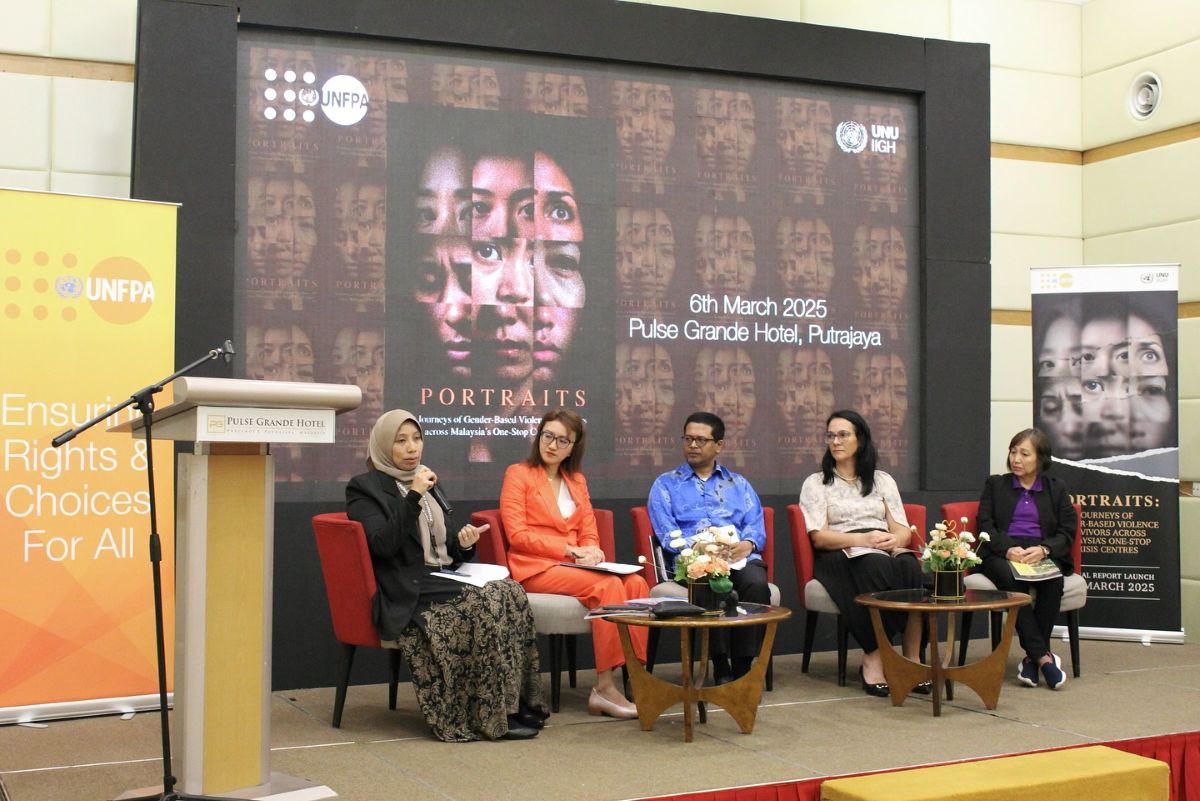
During a panel discussion last March 6 on a report by the United Nations Population Fund (UNFPA) Malaysia and the United Nations International Institute for Global Health (UNU-IIGH), that examines the efficacy of the OSCC model in Malaysia, undersecretary of the Ministry of Women, Family and Community Development, Asmar Asmadi Abdullah Sani, told the audience that there was “a significant surge in domestic violence cases in Malaysia”, with the number of cases recorded by the Royal Malaysian Police, (PDRM) reaching a three-year high in 2024 with 7,116 cases.
He noted that this marked a concerning increase from 5,527 cases in 2023, and 6,540 cases in 2022.
“This alarming trend underscores the need for a comprehensive support system and effective intervention to protect and empower survivors,” said Asmar.
While the UN report acknowledges that the OSCC model in Malaysia represents a comprehensive and integrated approach to addressing gender based violence in the country–encompassing immediate medical care, counselling services, police and legal support, social support and referrals to shelter homes–it also noted weaknesses in the model’s service delivery.
GBV survivors interviewed for the report raised various grievances about the difficulty of navigating the OSCC system as they bore the physical pain, and coped with the mental and emotional turmoil of having been subjected to violence.
While the OSCC policy and guidelines issued by the MOH states that ‘a police report is not a prerequisite for survivors aged 18 and above to be treated in the OSCC’, some of the GBV survivors interviewed in the UN report, including two rape victims, said they were denied medical treatment without a police report.
“If (the survivor) is a minor, of course, it’s obligatory and compulsory to have a police report. But 18 years old and over, it’s the choice of the survivor. But the health care workers encourage them to do the police report,” said Claudia Abreu Lopes, research lead at UNU-IIGH and lead author of the UN report.
“And what we hear from the survivors is that that can be quite disturbing. They are not in the right mindset to decide.”
The report noted that the mere presence of police officers can be intimidating, particularly to marginalised women such as transgender and refugee women, who live in fear of dismissal, discrimination, and deportation.
However, police officers are required to be present during evidence collection to maintain the chain of evidence, as per the OSCC policy and guidelines, which also stipulates that ‘all evidence collected shall be handed over to the police officer immediately and shall not be kept in the hospital’.
The need for police offices to be present for the collection of forensic evidence is one of the main challenges to the OSCC system in Malaysia, Lopes said.
She added that in some other countries, survivors are given a grace period to decide if they want to proceed to legal recourse.
“So what’s happening in other countries–and there’s some experience from the United States, UK, Australia, South Africa–is that the forensic evidence is immediately collected,” she explained.
“And then there’s a period where the survivor can decide whether they want to continue with lodging a police report and record proceedings. If they decide not to, the evidence will be destroyed; if they decide (to), the evidence is there.
“We need some adaptation,” she said, referring to the protocol in Malaysia. “So it means that maybe this forensic evidence needs to be kept in the hospital and not at the police (station).”
The panel discussion’s moderator, Tengku Aira Tengku Razif, assistant representative UNFPA Malaysia, clarified that this means the collection of forensic evidence can take place without a police report.
“So, that is an example of how that problem can be solved. Because if you are traumatised, then you are still taking time to decide. And by the time you decide that you want to file a police report, it might be too late.”
Another major issue highlighted in the report was that while having OSCCs embedded in the health system offers the convenience of proximity to other necessary medical services, it can come at the expense of other services that are needed, as the focus remains on immediate medical care.
While this is a critical component of the response to gender based violence (GBV), the current system does not adequately address the longer term need of survivors, particularly their reintegration into their communities and the ongoing support required for sustained healing, according to the report.
This includes psychological counselling, legal assistance, community support, and programmes that facilitate economic independence.
How NGOs Fill Service Provision Gaps
However, the report noted the significant role NGOs play in filling service provision gaps and providing support to GBV survivors.
Penang-based NGO Women’s Centre for Change (WCC) has had a collaboration with the OSCC since 2008, according to its service manager Ooi Say Tee.
“That means it has been 17 years we’ve worked with the OSCC on cases of domestic violence and also sexual assault.”
One of the observations she has made is that medical personnel in OSCCs are extremely overworked and have scant time to attend to patients.
“So that’s why we have collaborations to fill the gap,” she said, adding that doctors appreciate the NGO’s assistance. “When they see the survivor, they will ask them whether they want to (be referred) to WCC or not.”
She said WCC works with survivors by helping them explore their options and informing them about the services available to them.
“That means, for example, let’s say they don’t wish to go further, especially for domestic violence cases, maybe they just want to seek medical treatment without getting their husbands charged, we need to respect what the clients want,” Ooi explained.
“That means we need to identify what their needs are and also support them. And then they know what their rights are.”
Based on WCC’s experience assisting survivors, she said that one of the gaps they have observed is that medical personnel including nurses who are trained are often transferred to other departments.
On the law enforcement side, she said survivors are not updated by the police about the status of their investigation.
“So our role normally to fill this gap is we try to empower the clients to follow up with the IO (investigating officer). If not, then we will help them to follow up with the IO on the status.”
If the perpetrator is charged in court, Ooi said the deputy public prosecutor (DPP) sometimes has difficulties contacting the survivor.
“So WCC will come in and bridge the gap in contacting and communicating with the survivor. And then we also try to arrange for the DPP to meet the client.”
In cases where the DPP can only meet with the survivor for the first time in court, WCC will arrange a pre-trial briefing for the survivor, which will include educating them about their rights in court, such as providing video testimony, or having access to an interpreter, said Ooi.
“We will support them from the start, (when) they seek medical treatment at the OACC, until the case goes to court, and until the case finishes.”
She added that WCC also provides counselling services and referrals for clients who need long-term mental health treatment.
“Also, if let’s say, we assess the clients and find they need a psychiatrist’s assessment and long-term mental health care, we will refer them to the psychiatrist at the public hospital as well.”
Limited Accessibility To OSCCs In Rural Areas
Meanwhile, the report also cited a Women’s Aid Oganisation (WAO) study that found that many survivors of domestic violence and rape live in rural areas with no access to a coordinated service.
Not all hospitals have a dedicated OSCC room for survivors and this problem is more pronounced in rural areas.
Dr Siti Suhaila Hamzah, emergency consultant with MOH, acknowledged that there were challenges in the delivery of OSCC services, particularly in the areas of accessibility and coverage, that needed to be addressed. However, solving these issues requires some time, she said.
While most people have the perception that OSCCs are solely located in the hospitals, Dr Siti Suhaila, who serves at the emergency and trauma department at Hospital Sungai Buloh, said the effort has been made to extend the service to government health clinics.
“As you know, government health clinics are more accessible to rural survivors and in rural areas, and the government is making a good effort to place our colleagues, including family medicine specialists and emergency physicians, in these areas.”
However, she said that it will take four to five years to produce these specialists, adding that training on the OSCC is part of the national curriculum.
When it comes to coverage, the challenge arises because unlike emergency and trauma departments in hospitals, where the OSCCs are located, government clinics do not operate 24 hours a day.
Although there have been attempts to expand the service until 9pm, there are still limitations, she said.
Dearth Of Specialists To Attend To OSCC Patients
Another challenge when it comes to service delivery is that proper specialists to treat patients who seek the services of the OSCC are hard to come by, she continued.
“In the hospital itself, one of the challenges that we have is actually what we call rare species.
“Probably I would say that emergency physicians are not rare at the moment, because there are a total of about 600. But the O&G specialist, the general surgeon, particularly the colorectal surgeon, they are actually very limited at the moment. So, most of the time, they will spend their time in the operation theatre.”
However, she said when a survivor arrives, especially when they arrive within the critical period, they must be given priority.
“What I mean by critical period, is almost reaching 72 hours, where the case will be classified into a cold or hot, or fresh case.”
According to the OSCC policy and guidelines, fresh (also known as acute) cases are up to 72 hours from the time of incident.
The 72 hours cut-off is considered a window of opportunity to successfully treat survivors for sexually transmitted infection and any pregnancy that might have resulted from sexual assault.
Cases that present more than 72 hours from the last incident are considered ‘cold’ cases.
However, the policy and guidelines notes that forensic evidence may be available beyond 72 hours after the assault.
Therefore, the 72 hours cut-off should only be used as a guideline and not a rigid policy.
An examination to collect forensic evidence should therefore be based on the facts of the case, the victim’s history, and the likelihood of recovering evidence that will be needed for a successful prosecution, according to the policy and guidelines.
Dr Siti Suhaila said that since the number of specialists is actually still low compared to the demand, efforts must be made to empower the medical officers, whether they are juniors or seniors.
“The training is actually very, very crucial. Not only to our health care personnel, but it has to be standardised across the board, involving all the personnel who actually attend to the survivors from end to end. The training has to be there, and the implementation has to be there as well.”
The issue of implementation is perhaps what needs to urgently be addressed as some of the concerns brought up by survivors in the report are already stipulated in the OSCC policy and guideline.
This includes that ‘survivors shall be treated professionally with compassion, empathy and respect with a non-judgmental attitude’.
Another example is that ‘post exposure prophylaxis for emergency contraception and prevention of sexually transmitted diseases should be prescribed’.
In one of the case studies in the report, a rape survivor was told that she would be given post-exposure prophylaxis (PEP) only after she tested positive for HIV, defeating the purpose of prevention.
Updated OSCC Policy And Guidelines
Dr Siti Suhaila said the current policy and guidelines, which was published in July 2015, is in the process of being updated.
According to her, the updated policy and guidelines will be “more holistic” compared to the current guidelines as it incorporates inputs from the police and social welfare department.
It will also have detailed standard operating procedures (SOPs), which were developed with the help of frontliners, such as family medicine specialists.
She added that thanks to advancements in the medical field, the new policy and guidelines will also include dental forensics.
“It will have a very nice and simple guideline that will provide our junior doctors, especially in the rural areas where they have very limited access to certain specialists, a very good guide on how to actually address the injuries sustained by the survivors.”
She said it was important to standardise and streamline specimen handling, especially by junior doctors in rural areas.
The new policy and guideline will address this by embedding a QR code so that doctors will have access to a video that guides them on how to handle specimens step-by-step.
“And this is very important because everyone knows that we need to preserve the chain of evidence,” Dr Siti Suhaila said. “Otherwise, sometimes the case will end up as NFA (no further action).
She concluded that the updated policy, which will streamline and standardise OSCC SOPs, will be launched soon and that it can serve as a useful guidance to all GVB service providers, not just health care workers, but also the police, social welfare, and legal enforcement.