

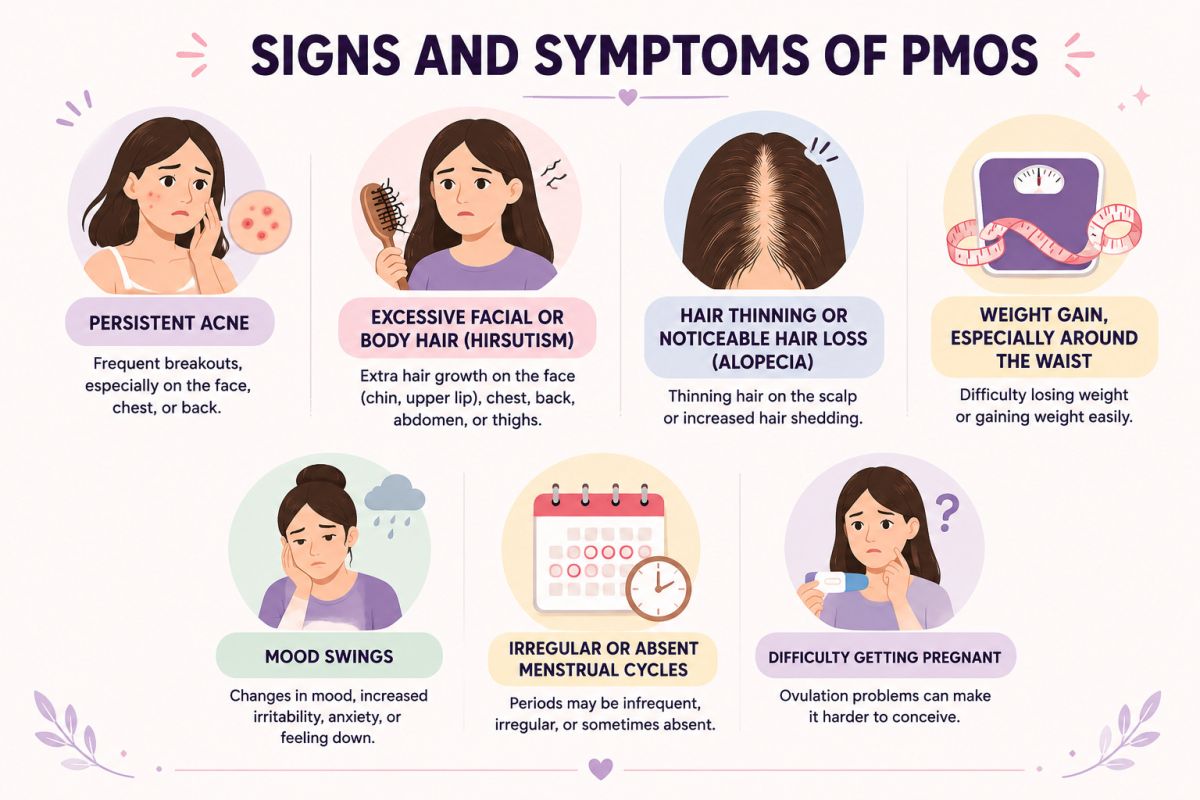
Polyendocrine Metabolic Ovarian Syndrome (PMOS) is one of the most common endocrine disorders among women of reproductive age, affecting one in eight women globally.
PMOS is closely linked with metabolic dysfunction. Androgen biomarkers, including total and free testosterone, can be used to support the diagnosis of PMOS.
Also, a pelvic ultrasound can be performed when menstrual irregularity alone is not sufficient to make the diagnosis.
What is often overlooked is the fact that many significant physiological changes may already be developing silently long before diagnosis.
Weight Gain And Insulin Resistance: I Eat Less, But Why Do I Still Gain Weight?
Women with PMOS often struggle to lose weight despite eating less. A major reason is insulin resistance. Insulin is a hormone that allows glucose to enter the body’s cells, where it is used as a source of energy.
When the body’s cells become less responsive to insulin, the body produces more of it, resulting in increased insulin levels (hyperinsulinemia) and making the body store excess glucose as fat.
At the same time, low cellular energy increases hunger and cravings for sugary foods. Hence, calorie-focused dieting is often ineffective.
The Hidden Inflammation Behind PMOS
PMOS is linked to chronic inflammation, which may interfere with brain signalling and affect serotonin and dopamine balance, contributing to mood swings, low motivation, and depression.
It also disturbs the body’s circadian rhythm and reduces deep sleep. As a result, women with PMOS often experience trouble sleeping and fatigue.
Healthy Weight, But Why Does One Still Have PMOS?
PMOS is not limited to overweight individuals. It can also appear in women with a healthy weight, low weight, or physically fit. This is known as ‘lean PMOS’.
This highlights that body weight alone does not always indicate healthy hormonal and metabolic status, as PMOS develops due to a combination of hormonal imbalance, insulin resistance, genetics, and inflammation.
The Emotional Weight Of PMOS
Women with PMOS have a higher risk of developing anxiety and depression due to biological and psychological factors. Biological factors can affect brain function and mood regulation.
Moreover, the physical symptoms of PMOS can significantly affect self-confidence and body image, leading to feelings of frustration and embarrassment. These experiences can gradually contribute to social anxiety, poor emotional well-being, and a negative self-image.
Managing PMOS: Small Steps Matter
Based on the International Evidence-Based Guideline for the Assessment and Management of Polycystic Ovary Syndrome, regular physical activity and healthy eating remain the first-line approach for PMOS management.
Activities such as jogging, cycling, or strength training can help maintain an active lifestyle while also relieving stress, which is known to increase cortisol levels (stress hormone).
When insulin levels are high, androgen levels may also rise, which can further worsen PMOS symptoms. Simple daily habits can also make a difference, such as choosing the stairs instead of the elevator or taking a short walk after meals.
Protein: Protein helps to promote fullness and satiety. It improves insulin sensitivity and supports weight management in PMOS.
Hence, many experts recommend that women with PMOS consume a high-lean protein diet (≥1.2g/kg of ideal body weight) to preserve muscle and improve resting energy expenditure.
Carbohydrate: Women with PMOS have a greater risk of developing insulin resistance, leading to hyperinsulinemia to keep glucose levels within the normal range.
Hence, choosing low glycemic index (GI) carbohydrates is important for blood sugar control. High-GI foods are digested quickly, causing a rapid rise in body sugar levels.
In contrast, low-GI foods are digested more slowly, leading to a more gradual release of glucose and preventing a glucose spike.
Fats: Healthy fats are important in supporting metabolic and hormonal health in women with PMOS.
The quality of fat matters more than the total amount of fat intake, especially polyunsaturated fat (PUFA) and monounsaturated fat (MUFA).
PUFAs (omega-3 and 6) reduce inflammation, support metabolic health and brain function, while MUFAs (omega-9) improve insulin sensitivity and LDL cholesterol (bad cholesterol) levels. In contrast, saturated fats should be limited due to their role in worsening insulin resistance and inflammation.
Fibre: There are two main types of fibre: soluble and insoluble fibre. Soluble fibre dissolves in water and forms a gel-like substance that slows digestion and glucose absorption, helping to reduce blood sugar spikes and increase feelings of fullness. Insoluble fibre adds bulk to stool and supports bowel movement.
Together, both contribute to a healthier diet and help manage PMOS symptoms, such as insulin resistance, appetite regulation, and overall metabolic health.
The Overlooked Nutrient Deficiencies In Women With PMOS
Vitamin D deficiency is often seen in women with PMOS and is associated with limited sun exposure.
Insufficient Vitamin D may affect bone health and influence glucose metabolism and insulin sensitivity. Adequate vitamin D status supports metabolic function and contributes to improved mental health.
Magnesium is another nutrient that is frequently overlooked. This deficiency is linked to low consumption of whole grains, legumes, and green leafy vegetables.
Magnesium is involved in regulating blood glucose and the proper functioning of insulin. Insufficient intake may reduce insulin efficiency in the body, contributing to insulin resistance.
Furthermore, many individuals consume insufficient omega-3. Omega-3 is essential fatty acids that cannot be produced by the body and must be obtained through the diet.
It manages PMOS by improving insulin resistance, lowering inflammation, and supporting ovulation and metabolic health.
Food Myths That May Worsen PMOS
| Myth | Fact |
| Carbohydrates worsen PMOS. | It is not necessary to fully avoid carbohydrates. Instead, the focus should be on the quality. Refined carbohydrates and sugary foods can trigger a glucose spike, while low GI and high fibre options keep blood sugar levels stable. |
| Supplements alone can manage PMOS | Supplements should only be used alongside a healthy lifestyle, not as an adjunct therapy for PMOS. Consult a health care professional before taking any supplements to identify any underlying nutrient deficiencies. |
| Women with PMOS should completely avoid fat | Not all fats are harmful. Healthy fats are essential for hormone production and satiety. Avoiding fat may worsen hormonal imbalance and irregular periods. |
In conclusion, PMOS is a complicated condition that is frequently misunderstood and can affect multiple aspects of a woman’s health.
While the symptoms can be difficult to manage, the condition can still be managed through healthy lifestyle habits, medical support, and emotional support.
Starting with small and easy changes is still a positive step. Over time, overall well-being and symptom severity can be improved.
Yap Rou En is a Master’s programme student in clinical nutrition, Universiti Kebangsaan Malaysia, and Dr You Yee Xing is a senior lecturer in dietetics, Universiti Kebangsaan Malaysia.
- This is the personal opinion of the writer or publication and does not necessarily represent the views of Ova.