


The private medical industry is scrubbing in for a big year ahead with the launch of the Malaysia Year of Medical Tourism (MYMT) 2026, which aims to position Malaysia as a premier medical tourism destination.
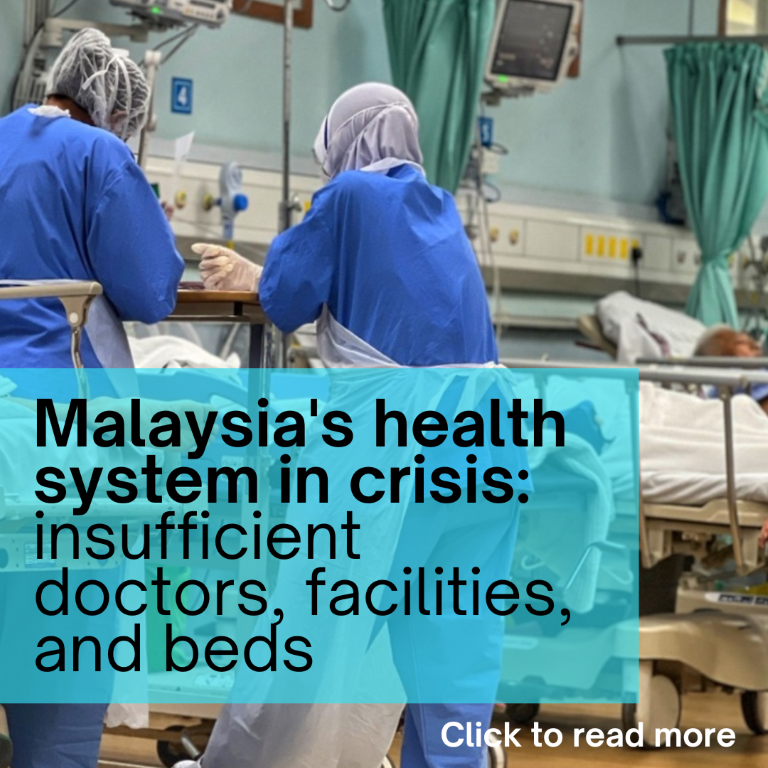
However, they are not the only ones preparing for a busy 2026. Across the nation, government run hospitals and clinics are getting ready for what will surely be another stressful and demanding year of rising patient numbers, shortage of professionals, and increasing costs.
The stark disparity between the private and public health care sectors cannot be more apparent, but medical tourism may offer a way forward towards universal health care in Malaysia.
Last year, our country had 1.6 million health care visitors, which marked a 14 per cent year-on-year increase, and resulted in generating RM2.72 billion in revenue, a 21 per cent growth compared to 2023.
Medical tourists spend more than just one bill, with their accompanying family needing lodging, food, and more.
It is an impressive achievement for our country and the government recognises the value this brings to the economy.
Under Budget 2026, the government has committed a further RM20 million to enhance medical tourism programmes under the Malaysia Healthcare Travel Council (MHTC).
However, there is an unaddressed gap between the public and private health care sectors in Malaysia that has been persisting for many years without any serious effort by the government to solve it.
The implications of the lack of health care reforms targeting this issue will mean more and more Malaysians are effectively locked out of private health care due to its ever-increasing costs, putting additional pressure on our already crumbling public health care system.
Additionally, medical tourism also raises the concern that it could siphon health care resources and give medical tourists better quality services than locals, as they are willing to spend more, effectively pushing local patients further down the queue.
The government must see MYMT 2026 as a valuable opportunity to enact policies that ensure a portion of every ringgit earned by private hospitals from medical tourism is channeled back into the public health care system.
This will help to redistribute the financial gains from private health care and create a more sustainable model of growth for medical tourism in Malaysia that can help to support our public health care system.
The Health Ministry has 11.04 per cent of the total 2026 Federal Budget RM46.52 billion budget (an increase of 2.76 per cent from the 2025 budget of RM 45.27 billion), but it will not be enough to fully alleviate the mega strain on the public health care system.
There are several gaps in essential services that will significantly benefit from increased public health care funding if a part of medical tourism profits were reinvested into the public system as follows:
Increase Staffing And Provide Better Pay For Doctors And Nurses
There has been a trend of mass resignations of doctors and nurses in public hospitals whose roles remained unfilled.
Doctors and nurses in public health care are overworked and underpaid, a huge factor driving many of them to move away to more profitable or less stressful pastures.
Between 2019 and 2023, more than 6,400 permanent and contract medical officers resigned, with nearly 1,050 specialists leaving the government service during the same period.
The nurse-to-population ratio in Malaysia is 3.6 nurses per 1,000 people, while the Organisation for Economic Co-operation and Development (OECD) average exceeds 9.2 per 1,000.
In 2023, CodeBlue conducted a survey that found 95 per cent of 1,652 respondents who were exclusively government health care workers across every state were thinking of resigning from their jobs.
Target Vulnerable Or Low-income Communities Who Still Lack Access To Quality Health Care
Martabat PJ has just conducted sexual and reproductive health workshops among orang asli communities in Pahang and found that there are significant gaps in the delivery of health care to several communities.
This includes lack of access to remote areas, long waiting times, and inconsistent mobile clinic services.
Additional resources would also help the government extend health care to marginalised communities such as refugees and migrants who are completely left to fend for themselves.
Training For Health Care Staff
Another issue that Martabat PJ found through our work was the lack of awareness that health care workers have over existing procedures on how to handle patients, especially those who have experienced violent sexual attacks.
Martabat PJ had called several hospitals across the country to enquire about their One Stop Crisis Centre (OSCC) only to find out that the person on the receiving end was not aware of the OSCC.
Even in urban areas like Kuala Selangor and Alor Setar, we found that health care workers struggled to connect communities with basic health care information.
Moreover, health care staff in several government clinics were not properly trained to handle patients, and complaints of dissatisfaction were not uncommon.
Investment In Preventive And Community Health Programmes
This includes areas like maternal and child health, sexuality education, chronic disease prevention, and community outreach programmes.
This is crucial given that in Malaysia, 47.6 per cent of people from the B40 community aged 40 and above have at least one undiagnosed non-communicable disease (NCD).
It is the responsibility of the government to ensure that access to quality health care is available to all.
With proper policies and mechanisms in place, revenue from private health care providers could help ensure that all Malaysians and marginalised communities benefit from the same system that attracts our foreign medical visitors.
There is no better time to put these policies in place than the MYMT 2026.
Martabat PJ is an NGO that aims to fight for an inclusive, healthy, and sustainable life, including a commitment to reduce, if not eradicate, poverty and hunger for all.
- This is the personal opinion of the writer or publication and does not necessarily represent the views of Ova.